Credit: Joe Pompliano
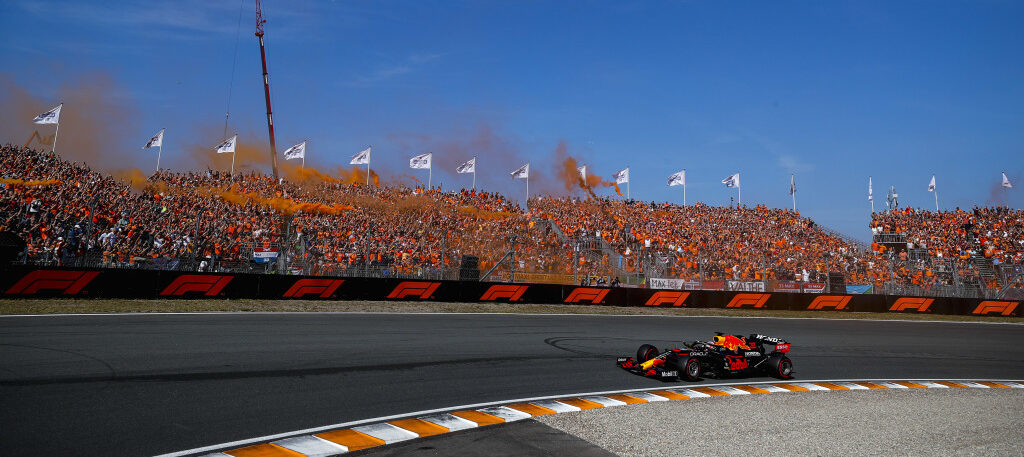
This weekend, more than 300,000 fans are set to descend on Circuit Zandvoort for the Dutch Grand Prix. Yet, what makes this event extraordinary is not only the racing but the fact that not a single one of those spectators will arrive by car.
Instead, fans will travel by train, bicycle, shuttle, or on foot — a radical shift in how large-scale sports events manage transportation, sustainability, and fan experience.
The Challenge: Turning a Dead-End Venue into a Global Showcase
When Formula 1 returned to Zandvoort in 2021 after a 36-year absence, the race faced fierce opposition. Residents and environmental groups filed lawsuits, citing concerns around nitrogen emissions, ecological damage, and overwhelming traffic.
Zandvoort is unique in its geography — the circuit is hemmed in by beaches, dunes, water, and a nature reserve, leaving just one access road. Traditional models of race-day travel were impossible. To survive, the Dutch Grand Prix had to reinvent the way fans engage with the event.
The Solution: A Transportation Revolution
Organizers created a three-tiered transport plan that redefined how fans reach a sporting venue:
- Trains Every Few Minutes – Dutch Railways ran services arriving at the track every 5–10 minutes, before, during, and after race days.
- Park & Bike Hubs – Fans could park several miles away and cycle through scenic dunes, making the journey part of the experience.
- Shuttle Buses on Biofuel – A fleet running on HVO100 biofuel (cutting emissions by 85%) catered to those who couldn’t cycle.
The results were staggering: 98% of fans arrived by train, bike, or shuttle. The remaining 2% were restricted to F1 staff, drivers, and accredited personnel. In one stroke, Zandvoort rewrote the playbook for event transportation.
Beyond Travel: Rethinking Waste and Fan Engagement
Visitor transport usually accounts for 70% of an event’s carbon footprint — but Zandvoort didn’t stop there. Organizers tackled waste management with the same level of innovation:
- One-Bin Disposal System – Instead of asking fans to sort waste, local processors separated trash after collection, ensuring simplicity and compliance.
- Material Reuse – Banners, signage, and branded items were designed for multi-year use, later converted into bags or boards.
- Education & Clean Teams – Signs across dunes explained environmental impact, while teams patrolled to prevent litter.
The most impactful initiative, however, was the recycling token system. Fans received a token upon entering the circuit, which they exchanged when purchasing a drink. To reclaim the token, they had to return their cup — or pay a small replacement fee. Tokens doubled as entries into online prize draws, turning recycling into a game with real rewards. This alone drove a 75% recycling rate for cups.
Instead of spending on cleanup crews, organizers incentivized fans to clean up themselves — saving money, improving efficiency, and gamifying sustainability.
The Bigger Picture: A Legacy That Outlives the Race
Ironically, despite being hailed as F1’s Promoter of the Year, the Dutch Grand Prix will exit the calendar after 2026. The economics simply don’t add up. Other circuits are willing to pay higher hosting fees, leaving Zandvoort priced out despite its success.
Yet, the legacy of the Dutch Grand Prix has little to do with economics. Its impact lies in proving that major global sporting events can be sustainable without sacrificing fan experience. By leveraging incentives, culture, and creativity, Zandvoort has given the sports world a sustainability blueprint worth replicating.
In the era where climate accountability and fan engagement go hand-in-hand, the Dutch Grand Prix stands as a case study: not in racing, but in reimagining what it means to host a mega-event responsibly.
365247 Media Insight:
The Dutch Grand Prix demonstrates how sustainability, when executed with creativity, becomes an economic, cultural, and commercial advantage. As global sport evolves, this model will increasingly separate hosts that thrive from those that struggle to balance growth with responsibility.
Partner With Us
Want to feature your brand, business, or service on 365247 — Whether you’re looking to sponsor, collaborate, or build presence within our ecosystem, we’d love to explore it with you.
Submit your interest here
IMAGE: Charles Coates / LAT Images