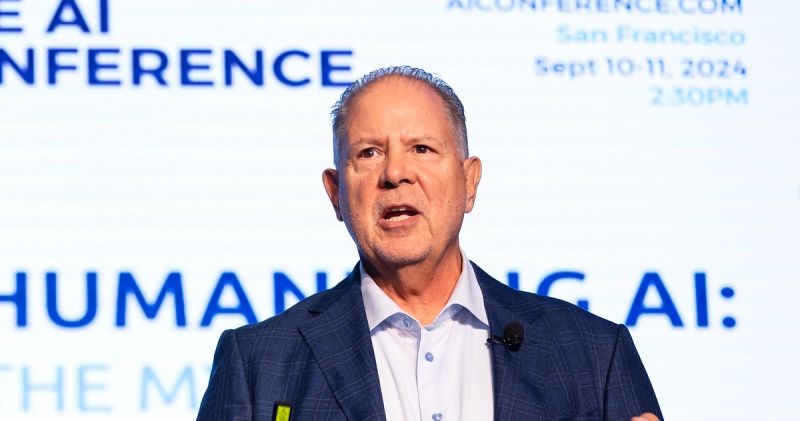
When the history of corporate AI adoption is written, Eric Vaughan’s playbook at IgniteTech may stand out as one of the boldest — and most controversial — experiments.
In early 2023, Vaughan, the longtime CEO of the enterprise software company, came to a blunt conclusion: artificial intelligence wasn’t just another technology wave. It was an existential shift that would redefine survival in the digital economy. His next move was as drastic as it was disruptive — a wholesale restructuring of his workforce, with nearly four out of five employees replaced in under a year.
“It wasn’t about headcount reduction,” Vaughan explained. “It was about rethinking culture.”
The AI Mandate
From the outset, Vaughan framed AI not as a department-level project but as the centerpiece of IgniteTech’s future. His company-wide message was unambiguous: every team, from engineering to sales, needed to embed AI into their daily work.
This wasn’t symbolic. The company rolled out “AI Mondays,” weekly sprints where staff could only focus on building, testing, or experimenting with AI applications. Customer calls, budget planning, and routine business tasks were put on hold. To support the push, IgniteTech poured resources into training, reimbursed employees for AI toolkits, and even brought in external educators to accelerate adoption.
Despite heavy investment, resistance proved stubborn. Many employees, particularly within technical functions, questioned AI’s capabilities or resisted the abrupt cultural change. Vaughan soon realized the challenge wasn’t just about skills. It was about belief. And in cases where belief could not be won, exits followed.
The Challenge of Resistance
IgniteTech’s struggle mirrors what researchers are observing across industries. A 2025 enterprise AI adoption report from platform provider WRITER revealed that roughly one-third of employees admit to actively undermining AI rollouts. This “quiet sabotage” can range from refusing to use new tools to producing deliberately low-quality results. The reasons vary — fear of job displacement, frustration with imperfect AI systems, or distrust of management’s vision.
Experts caution that this isn’t just about reluctance to learn. It’s also about organizational clarity. When workers are handed vague strategies or underperforming tools, frustration turns into disengagement.
Rebuilding From the Ground Up
For Vaughan, the solution was to rehire with intent. IgniteTech began searching for what it called “AI Innovation Specialists,” across all business functions. The company’s organizational chart was reshaped so that every division now reported into a central AI leadership structure, ensuring consistency and knowledge sharing.
The payoff came quickly. By late 2024, IgniteTech had launched patent-pending AI products, including an automation platform for email marketing, and completed a major acquisition while still posting margins north of 70%. The speed of execution changed dramatically — Vaughan claims the company can now bring customer-ready solutions to market in just days.
Lessons for the Industry
IgniteTech’s story is extreme, but it raises questions that every company will need to confront. How do leaders drive cultural change when technology is advancing faster than workplace mindsets? Should organizations double down on retraining, or is replacement sometimes inevitable?
Other firms are experimenting with different paths. Ikea, for example, has leaned into what it calls a “people-first AI approach,” using automation to free employees for more creative and human-centric work. Training providers like Mindstone argue that upskilling is a more sustainable strategy than mass turnover, though they acknowledge that many workers are reluctant learners.
The Bigger Picture
For Vaughan, the conclusion is straightforward: AI is not a side project. It is a redefinition of how business operates. “This isn’t a technology shift,” he has said. “It’s a cultural shift and a business shift.”
He admits that IgniteTech’s drastic restructuring is not a model he recommends to others. But in his eyes, the alternative — moving too slowly — carried far greater risk.
The broader lesson may be this: companies cannot treat AI as optional or isolated. Whether through reskilling or rebuilding, leadership must align culture, strategy, and execution around the reality that AI is no longer the future. It’s the present.
Partner With Us
Want to feature your brand, business, or service on 365247 — Whether you’re looking to sponsor, collaborate, or build presence within our ecosystem, we’d love to explore it with you.
Submit your interest here