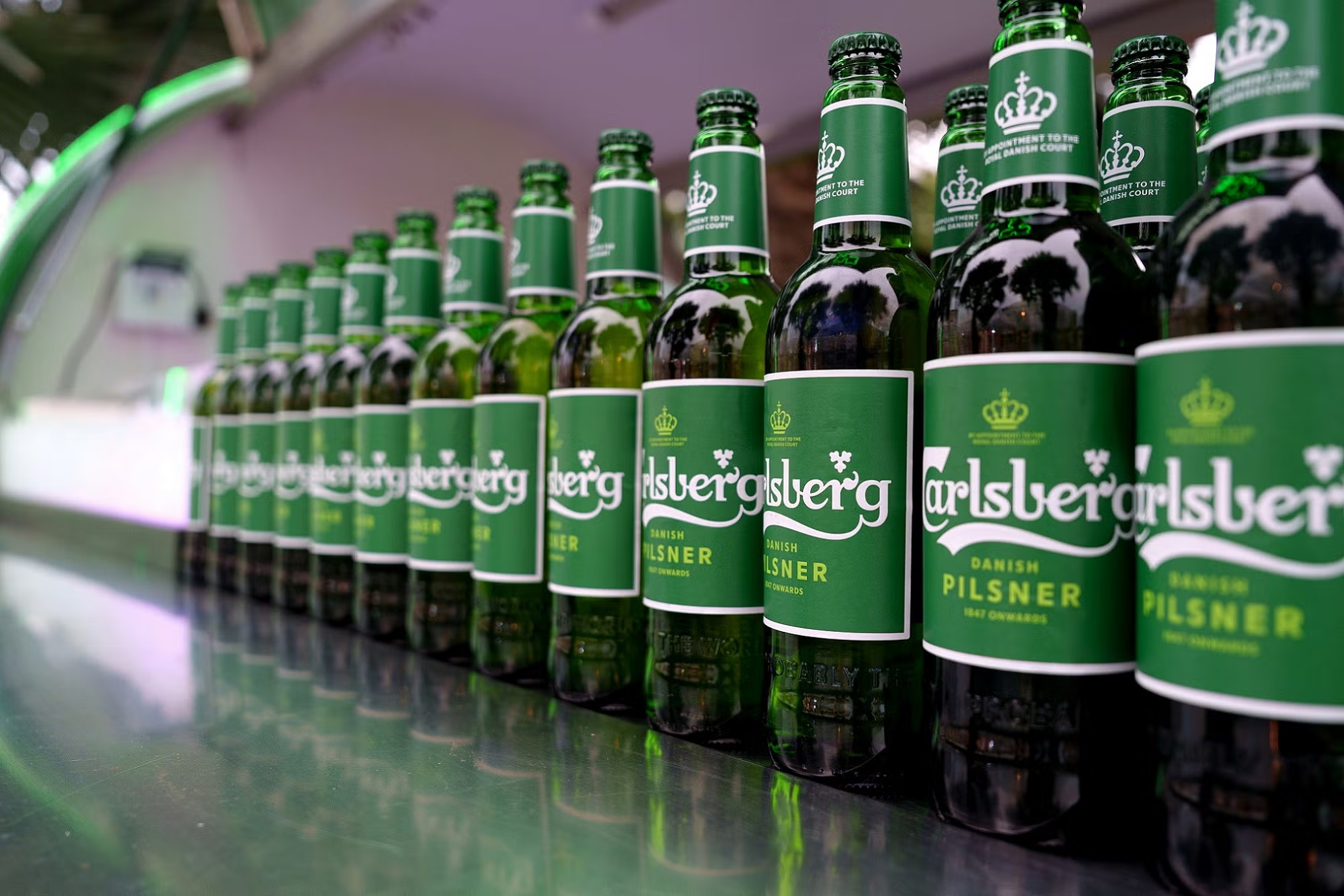
Danish brewer Carlsberg (CARLb.CO) saw shares drop nearly 7% in early trading after missing half-year profit and volume forecasts, citing ongoing consumer pressures that are unlikely to ease for the rest of 2025.
The world’s third-largest brewer, known for brands such as Kronenbourg 1664, Tuborg, and Somersby, reported first-half operating profit growth of just 2.3%, while volumes declined 1.7%. Although Carlsberg raised the lower end of its annual profit guidance, it was insufficient to offset the slower-than-expected performance.
CEO Jacob Aarup-Andersen described the results as “strong in a difficult year” and expressed hope for slightly improved volume growth in the second half. Nevertheless, he warned that consumer spending remains constrained by price increases and economic uncertainty, and there are no signs of improvement in the short term.
The broader beer industry has been facing multiple challenges, including reduced demand, the impact of U.S. tariffs, and adverse weather conditions. Analysts highlighted that Carlsberg’s volume shortfall, particularly in Asia, contributed to the steep share decline—the largest since July 2024.
Longer-term structural changes, such as consumers moderating alcohol consumption for health reasons, continue to dampen optimism around the sector. While Carlsberg had previously aimed for 4–6% annual revenue growth through 2027, the company acknowledged that achieving these targets may not be fully realistic in challenging years like 2025.
Carlsberg Misses H1 Targets, Warns of Challenging Consumer Environment for Remainder of 2025
Danish brewer Carlsberg (CARLb.CO) saw shares drop nearly 7% in early trading after missing half-year profit and volume forecasts, citing ongoing consumer pressures that are unlikely to ease for the rest of 2025.
The world’s third-largest brewer, known for brands such as Kronenbourg 1664, Tuborg, and Somersby, reported first-half operating profit growth of just 2.3%, while volumes declined 1.7%. Although Carlsberg raised the lower end of its annual profit guidance, it was insufficient to offset the slower-than-expected performance.
CEO Jacob Aarup-Andersen described the results as “strong in a difficult year” and expressed hope for slightly improved volume growth in the second half. Nevertheless, he warned that consumer spending remains constrained by price increases and economic uncertainty, and there are no signs of improvement in the short term.
The broader beer industry has been facing multiple challenges, including reduced demand, the impact of U.S. tariffs, and adverse weather conditions. Analysts highlighted that Carlsberg’s volume shortfall, particularly in Asia, contributed to the steep share decline—the largest since July 2024.
Longer-term structural changes, such as consumers moderating alcohol consumption for health reasons, continue to dampen optimism around the sector. While Carlsberg had previously aimed for 4–6% annual revenue growth through 2027, the company acknowledged that achieving these targets may not be fully realistic in challenging years like 2025.
Partner With Us
Want to feature your brand, business, or service on 365247 — Whether you’re looking to sponsor, collaborate, or build presence within our ecosystem, we’d love to explore it with you.
Submit your Interest Here
IMAGE: Shutterstock