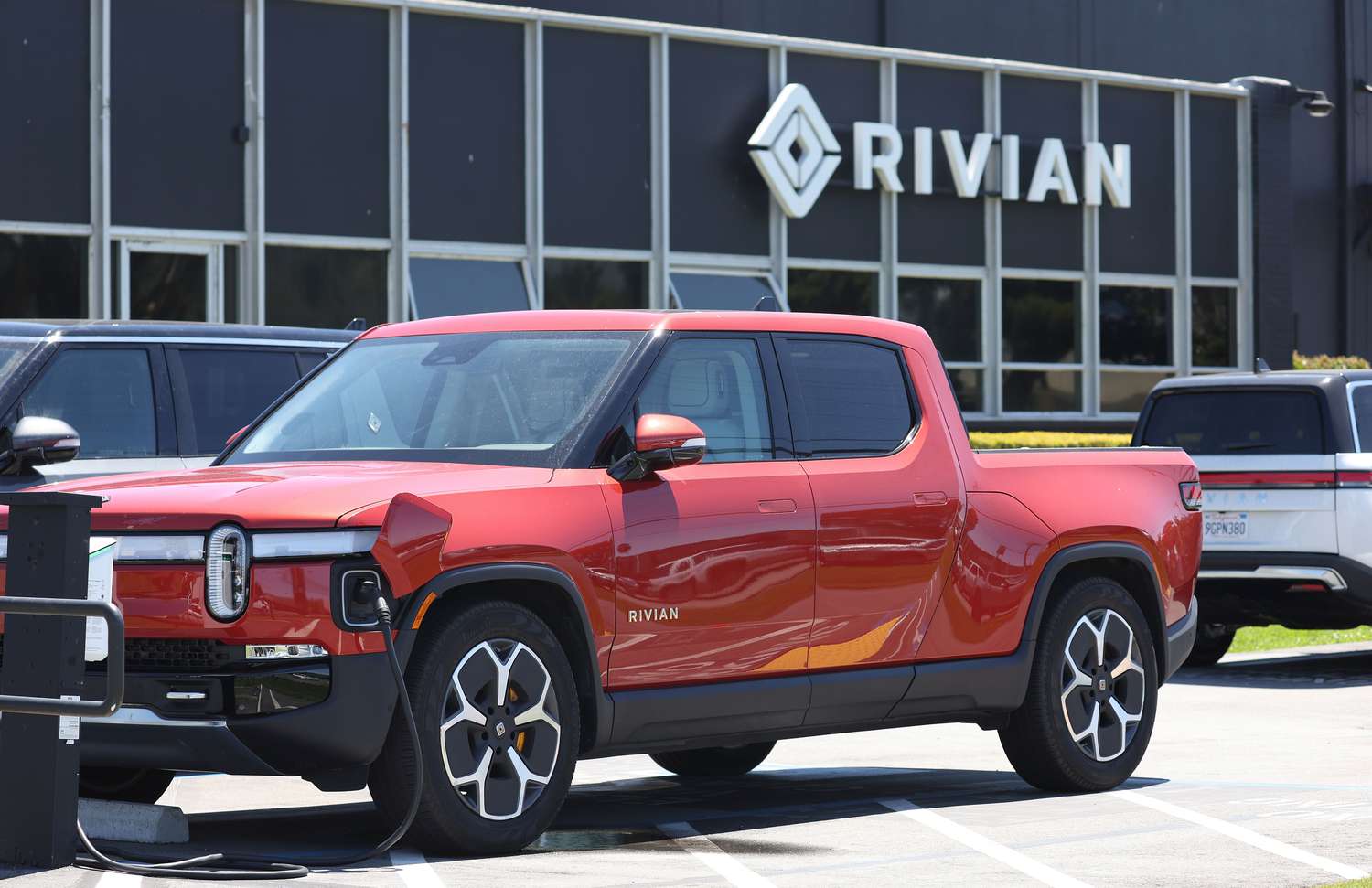
Rivian Automotive is navigating a turbulent chapter in its growth story. The U.S.-based electric vehicle (EV) maker posted mixed second-quarter results, marked by rising revenues but a continued lack of gross profit — a signal that operational efficiency remains a work in progress.
Worsening the picture is a broader macro headwind: policy changes both domestic and international are complicating Rivian’s path to profitability. New U.S. tariffs and a phased-out EV tax credit have added thousands of dollars in per-unit costs, forcing the company to revise its full-year EBITDA loss projections significantly upward.
Rivian now expects its 2025 adjusted EBITDA loss to range between $2 billion and $2.25 billion — up from previous guidance of $1.7 billion to $1.9 billion. The implications are clear: the company is still in investment mode, but external conditions are eroding runway visibility.
Quarter in Numbers: Progress Wrapped in Pain
Rivian generated $1.303 billion in revenue for Q2, slightly above expectations and a notable jump from the $1.158 billion in the same period last year. However, it posted a loss per share of $0.97 and an adjusted EBITDA loss of $667 million — deeper than analysts projected.
Crucially, this marks the first quarter in three where Rivian failed to register a gross profit, underlining just how vulnerable its margin structure is to regulatory changes and supply chain cost inflation.
Strategic Bets: R2 Development and Capacity Expansion
Amidst the financial noise, Rivian is betting big on its next major product — the R2, a more affordable midsize SUV aimed at unlocking mainstream adoption. The company reported significant progress in R2 development, with production equipment now being installed at its expanded Illinois facility. Production is targeted for 2026.
To support this rollout, Rivian will pause operations at its primary plant for three weeks in September to retool and prepare for higher output — scaling capacity up to 215,000 vehicles annually.
Despite short-term delivery misses (10,661 vehicles delivered vs. ~10,800 expected), Rivian reaffirmed its 2025 guidance to deliver 40,000 to 46,000 units — a vote of confidence in its supply chain readiness.
What Lies Ahead: Credit Phase-Out, Volkswagen JV, and Market Sentiment
CEO RJ Scaringe has flagged Q3 as potentially Rivian’s strongest sales quarter yet, anticipating a surge in demand from buyers looking to purchase before the EV tax credit expires at the end of September.
Meanwhile, investors await greater clarity on Rivian’s high-profile joint venture with Volkswagen, a $5.8B deal that could prove pivotal to long-term scalability, particularly in autonomy and software.
Yet not all analysts are convinced. Rivian continues to battle perception headwinds. With factory downtime on the horizon and R2 preparations set to squeeze overhead absorption, doubts persist about Rivian’s ability to navigate the second half of the year without further strain.
365247 Take: Rivian Is Playing the Long Game — But Can It Afford To?
Rivian’s Q2 results underscore a company walking a strategic tightrope: accelerating product development, betting on new partnerships, and expanding capacity — all while bleeding capital and facing policy disruptions.
For investors and industry watchers, the R2 rollout and Volkswagen JV may determine whether Rivian evolves into a scalable competitor in the EV space — or remains a niche, high-burn challenger.
Partner With Us
Want to feature your brand, business, or service on 365247 — Whether you’re looking to sponsor, collaborate, or build presence within our ecosystem, we’d love to explore it with you.
Submit your Interest Here
IMAGE: Getty Images