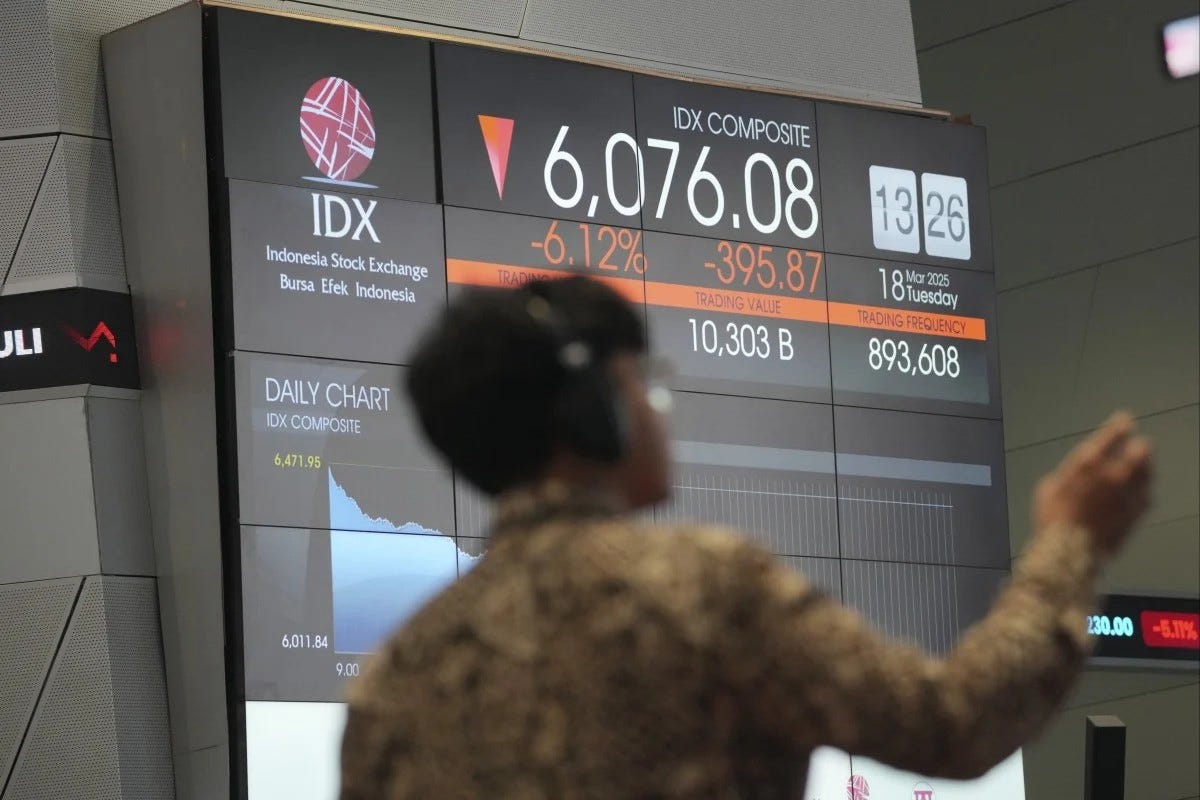
Indonesia’s government-reported GDP figures for Q2 2025 have sparked debate among leading economic analysts and independent research institutions, as questions mount over the credibility and consistency of official data.
According to a recent release from Statistics Indonesia, the nation’s economy expanded by 5.12% year-on-year between April and June — its fastest growth rate in two years. The report attributes this momentum to strong household consumption and robust investment activity, positioning the country ahead of market expectations. Analysts had forecast a median growth of 4.8%, with the most bullish estimates not exceeding 4.9%.
However, this optimistic outlook is now being challenged.
Several Jakarta-based think tanks have publicly disputed the headline figures, pointing to contradictory signals across key economic indicators — including declining automotive sales, a drop in foreign direct investment, contractions in manufacturing, and even rising layoffs. Collectively, these metrics paint a picture of economic softening, not acceleration.
“It’s not just about numbers — it’s about trust,” said Andry Satrio Nugroho from the Institute for Development of Economics and Finance. “You can’t formulate strong public policy on weak or manipulated data. If credibility falters, so does investor confidence.”
The Center of Economic and Law Studies raised even sharper concerns, suggesting that political pressure may be influencing economic data presentation — particularly with President Prabowo Subianto’s administration targeting 8% growth by 2029.
Bhima Yudhistira, the think tank’s executive director, argued that presenting overinflated economic resilience may be part of a broader narrative to signal policy success. Meanwhile, Mohammad Faisal of the Center of Reform on Economics noted a sharp divergence between official Q2 GDP data and leading indicators in areas such as household consumptionand private sector investment.
Private sector sentiment mirrors this skepticism.
From corporate earnings reports showing revenue declines to employer associations reporting weak sales and fragile consumer demand, the narrative emerging from the business community doesn’t match the optimism of the official figures.
Jahen Rezki of the University of Indonesia’s economic research institute emphasized that declining revenues across sectors call into question the growth story being told. And Sutrisno Iwantono, a senior figure within the Indonesian Employers Association, cautiously stated:
“We’re not saying the data is wrong. But methodological errors or bias, intentional or not, could have serious consequences.”
In response to the growing scrutiny, Statistics Indonesia defended the integrity of its reporting, maintaining that all practices conform to international standards. Economic Affairs Minister Airlangga Hartarto also dismissed allegations of data manipulation outright, stating there is “no such thing.”
Still, with diverging interpretations and underlying distrust simmering, the episode underscores a growing challenge for emerging economies: balancing political objectives with statistical transparency.
Partner With Us
Want to feature your brand, business, or service on 365247 — Whether you’re looking to sponsor, collaborate, or build presence within our ecosystem, we’d love to explore it with you.
Submit your Interest Here