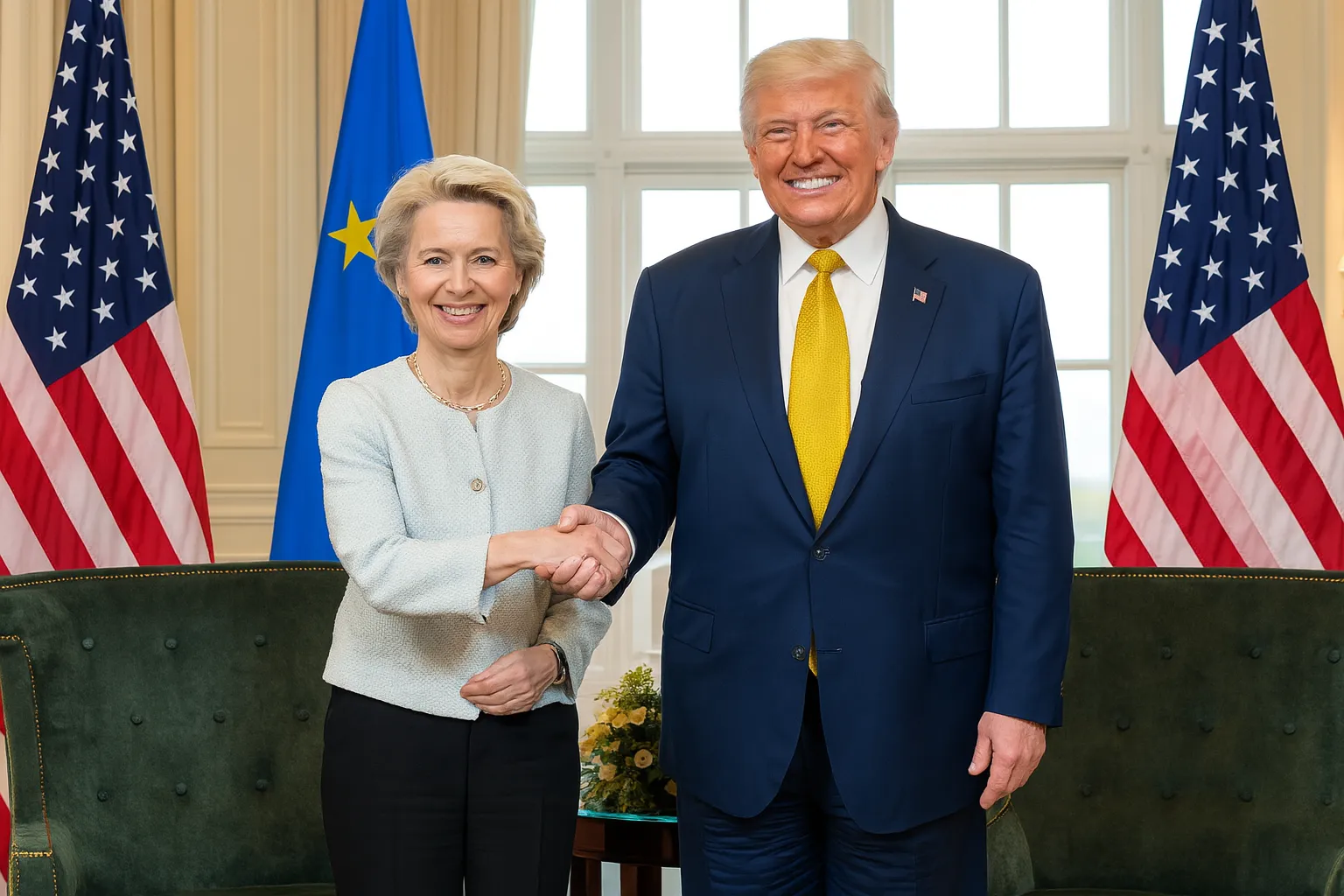
As trade tensions continue to simmer globally, the European Union is banking on a carefully negotiated insurance policy with Washington — a broad 15% tariff ceiling that will apply to most of its exports to the U.S. — to anchor some stability in transatlantic commerce.
Despite the recent turbulence in U.S.-EU trade discussions, EU officials remain cautiously optimistic. With the 27-member bloc being America’s largest trading partner, the EU is awaiting final executive orders from the U.S. administration that would formally align tariffs — particularly on cars and car parts — with the mutually agreed 15% rate.
A senior EU official confirmed that while “further turbulence” is expected, the EU is better positioned than many other trade partners. “We have a solid foundation. This agreement fundamentally changes the framework with the U.S. Even if the U.S. does not uphold the deal, we have mechanisms in place to respond,” the official noted.
A Framework, Not a Finale
The current deal leaves several items — including tariff rates on wine and spirits — unresolved. However, negotiations for a joint EU-U.S. statement are reportedly in an advanced stage, with Brussels awaiting final responses from Washington to formalise the agreement.
The EU has clarified that this all-inclusive 15% tariff is a flat rate across its goods — unlike tiered deals struck with countries such as the UK. For example, while European cheese will face a 15% duty in the U.S., British cheese could be hit with tariffs exceeding 24% once all layers are accounted for.
“This is not something we’re celebrating, but it is clearly the best available treatment in the current geopolitical context,” said the EU official. He stressed that this is less about triumph and more about pragmatism in a challenging global trade environment.
Key Sectors and Exemptions
Some sectors, like pharmaceuticals and semiconductors, currently enjoy a zero-tariff arrangement. Even if U.S. investigations into foreign imports in these sectors lead to new tariffs, the EU has secured assurances that rates will not surpass the 15% ceiling.
Discussions around steel remain complex due to volume-related sensitivities. In parallel, Brussels is working to finalise a list of critical goods it wants fully exempt from tariffs, aiming for as many “zero-for-zero” product classifications as possible.
France’s wine and spirits industry is still in limbo. Gabriel Picard, head of the FEVS exporters federation, expressed hope that these products might be added to the exemption list before the new rules go into effect: “We are 48 hours away from a decision, and we have not lost hope.”
Partner With Us
Want to feature your brand, business, or service on 365247 — Whether you’re looking to sponsor, collaborate, or build presence within our ecosystem, we’d love to explore it with you.
Submit your Interest Here
IMAGE: European Commission