Source credit: SportsPro
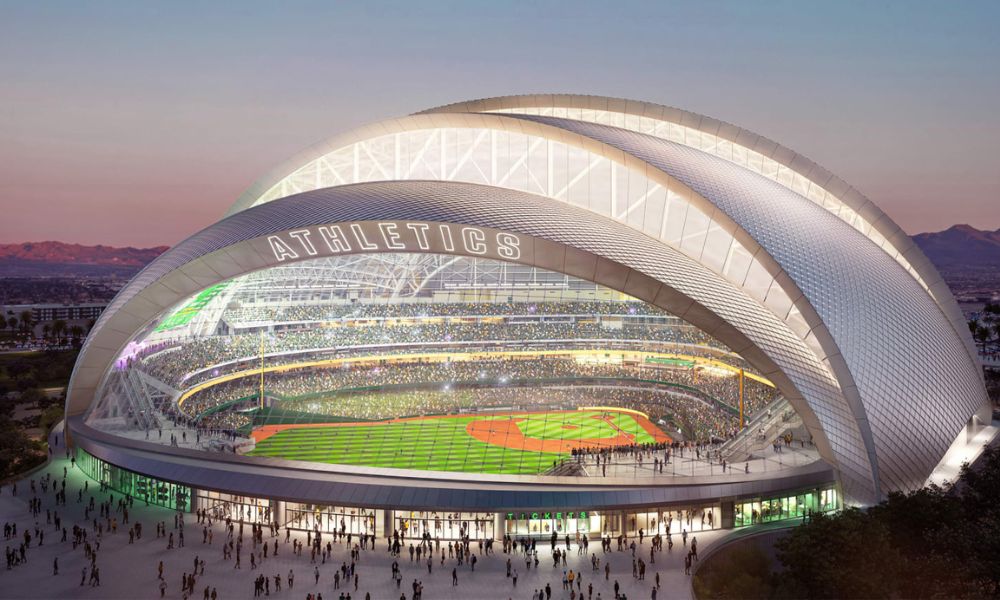
Major League Baseball’s (MLB) relocation narrative continues to unfold with significant financial and strategic implications. The Oakland Athletics’ upcoming move to Las Vegas is now set to carry a projected cost of approximately $2 billion, a steep rise from the previously reported $1.5 billion estimate when the move was first approved by MLB owners in late 2023.
The new stadium is being developed on the Tropicana Hotel site, and if completed on schedule, will be the second most expensive non-gaming venue in Las Vegas—surpassing the cost of the NFL’s Allegiant Stadium ($1.9B), and trailing only behind the high-tech $2.3B Sphere.
Speaking to The Nevada Independent, Athletics owner John Fisher confirmed the cost escalation, attributing it to an evolving vision of creating a ballpark that reflects Las Vegas’ bold, distinctive character. “Vegas is one of the most unique towns in the world,” Fisher noted. “We wanted a building that would symbolise that excitement.”
Construction officially began in June 2025, with a scheduled opening set for MLB Opening Day 2028. During the transition period, the A’s will temporarily play at Sutter Health Park in Sacramento from 2025 to 2027.
A Stadium as an Experience: The Business Case
Fisher’s ambition is to create “the most intimate ballpark in baseball”, a concept that aligns with broader trends in sports infrastructure—where the focus shifts from scale and spectacle to immersive fan experiences, premium hospitality, and community integration.
This ambition, however, comes with a price tag. While no breakdown of the newly inflated costs has been detailed, the funding plan is a layered mix of private investment, institutional lending, and public contribution:
- $1.1 billion from Fisher and ownership
- $300 million in loans from US Bank and Goldman Sachs
- $350 million in public financing approved by the Nevada government
The rise in development cost does not appear to affect the financing structure fundamentally—according to the A’s Vice Chairman Sandy Dean, additional outlays had already been forecast as a contingency. Crucially, the public contribution remains fixed, ensuring that taxpayer exposure won’t increase with the latest estimates.
Strategic Partnerships Already Underway
In a notable development, Aramark recently secured a long-term partnership for the new stadium’s food and beverage services. According to Sports Business Journal, the agreement also involves a $100 million equity investment by Aramark into the Athletics, representing a growing trend of vendors securing early-stage stakes in sports franchises to align deeper operational and financial incentives.
Fisher has also confirmed his active search for additional strategic partners—not just as passive investors, but as stakeholders who align with the brand’s identity in both baseball and Las Vegas culture.
Interestingly, while Fisher is currently selling MLS club San Jose Earthquakes, he made clear that proceeds from that sale would not be used to fund the new baseball stadium, reinforcing the A’s standalone capital strategy.
365247 Strategic Takeaway
This isn’t just a relocation story. It’s a blueprint for how stadiums are now central to franchise transformation—not only as physical infrastructure, but as real estate, media, and brand leverage plays.
For Las Vegas, the Athletics’ arrival reinforces the city’s evolution into a multi-sport powerhouse. For MLB, it’s a chance to reinvigorate a franchise and test the upper limits of market expansion in a high-risk, high-reward entertainment capital.
For ownership groups and city planners worldwide, this is a live case study in venue economics, public-private balance, and the future of stadium-as-platform thinking.
Partner With Us
Want to feature your brand, business, or service on 365247 — Whether you’re looking to sponsor, collaborate, or build presence within our ecosystem, we’d love to explore it with you.
Submit Your Interest Here
IMAGE: Athletics