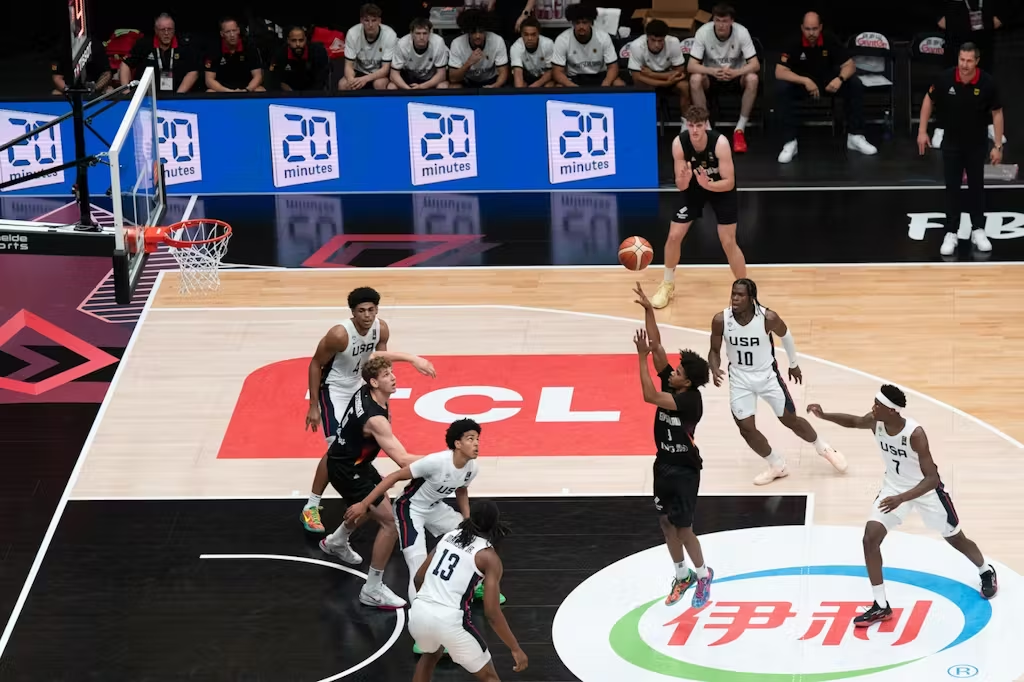
Reporting adapted from SportBusiness | Credit: SportBusiness & FIBA
The 2024 FIBA U19 Basketball World Cup in Lausanne was more than just a tournament—it marked a decisive shift in how basketball is analysed, broadcast, and experienced. For the first time in FIBA history, artificial intelligence, real-time tracking, and data visualisation converged in a fully integrated framework, reshaping expectations for performance analysis and fan engagement.
This initiative, part of FIBA’s long-term strategic alliance with Genius Sports (running through 2035), introduced AI-powered optical tracking to live competition. The technology powered by GeniusIQ—Genius Sports’ proprietary AI platform—enabled a suite of tools that benefited fans, broadcasters, coaches, and players alike.
A New Standard for Smart Basketball
Through real-time player tracking, augmented live broadcasts, and deep performance analytics, the tournament set a new benchmark for how basketball can be presented and dissected. Coaches were equipped with actionable metrics for strategy and development. Fans received immersive visuals, including defender proximity and shooting probabilities in real time—features previously reserved for elite analytics labs.
“It’s all about laying the foundation for smarter decision-making and richer basketball experiences,” said Bart Prinssen, Head of FIBA’s Equipment & Venue Centre. He emphasized how quickly the utility of the technology resonated with teams, fans, and media partners alike.
The Future of Data-Driven Broadcasting
Fans tuning into the official YouTube broadcasts were introduced to a new layer of storytelling: shot probability data, court spacing visuals, and dynamic performance metrics brought the game to life in ways never seen before at this level. A live poll conducted during the stream found that 75% of viewers welcomed the enhancements, reinforcing the commercial potential of integrating AI into live sports media.
According to FIBA, this response validates the long-term value of these technologies—not just for in-game storytelling but also as assets for licensing, sponsorship activation, and new revenue models such as subscription content or advanced scouting tools.
Data at the Core of Competitive Edge
From a player development perspective, the tournament delivered unprecedented clarity. American standout Caleb Holt was identified as the top performer in estimated field goal percentage, while Serbia’s Savo Drezgic led in potential assists. These granular insights allowed coaches to refine training regimens and tactical decisions in real time—highlighting the competitive edge that data integration offers.
Steven Burton, Chief Partnerships Officer at Genius Sports, commented:
“The modern basketball fan—and coach—wants far more than traditional box scores. They want insights that help explain not just what happened, but why it happened. With GeniusIQ, we’re making that possible in real time.”
Global Rollout Already Underway
Building on the successful showcase in Lausanne, Genius Sports has expanded its footprint, installing tracking systems in the Lithuanian Basketball League (LKL), where the technology is already enhancing broadcasts and unlocking new commercial inventory for sponsors.
Julien Vonovier, assistant coach of the Swiss national team, highlighted the tools’ utility for scouting and performance analysis—adding that the collaborative development between FIBA and Genius Sports ensures the solutions are not generic but tailored specifically to basketball’s evolving needs.
FIBA’s long-term ambition is clear: to create a global, integrated technology ecosystem for basketball across all levels—from elite international competition to grassroots leagues.
A Vision for 2025 and Beyond
FIBA’s expanded team is now working closely with national federations to scale the technology throughout their domestic competitions. According to Prinssen, the youth-focused U19 event was only the beginning:
“By 2025, our aim is to help national federations modernise their entire data infrastructure. We’re not simply innovating for FIBA; we’re providing tools, knowledge, and frameworks for the entire global basketball community.”
Burton added that the pipeline of innovation is far from complete. Future iterations of the technology may soon assist referees in reviewing out-of-bounds plays using player-perspective visualisation, or enable coaches to analyse in-game decisions from new vantage points.
Conclusion: Basketball’s Tech Renaissance Has Begun
The FIBA-Genius Sports collaboration represents a paradigm shift in how basketball is analysed, commercialised, and enjoyed. With AI, advanced tracking, and immersive media now entering mainstream implementation, the U19 World Cup served not just as a tournament, but as a launchpad for the next generation of smart sports infrastructure.
As global federations begin to adopt these tools, the future of basketball—on and off the court—is set to become more intelligent, interactive, and innovative than ever before.
Reporting adapted and editorialised by 365247 Media. Original source: SportBusiness. Image and data credit: FIBA.
Partner With Us
Want to feature your brand, business, or service on 365247 — Whether you’re looking to sponsor, collaborate, or build presence within our ecosystem, we’d love to explore it with you.
Submit Your Interest Here
IMAGE: FIBA