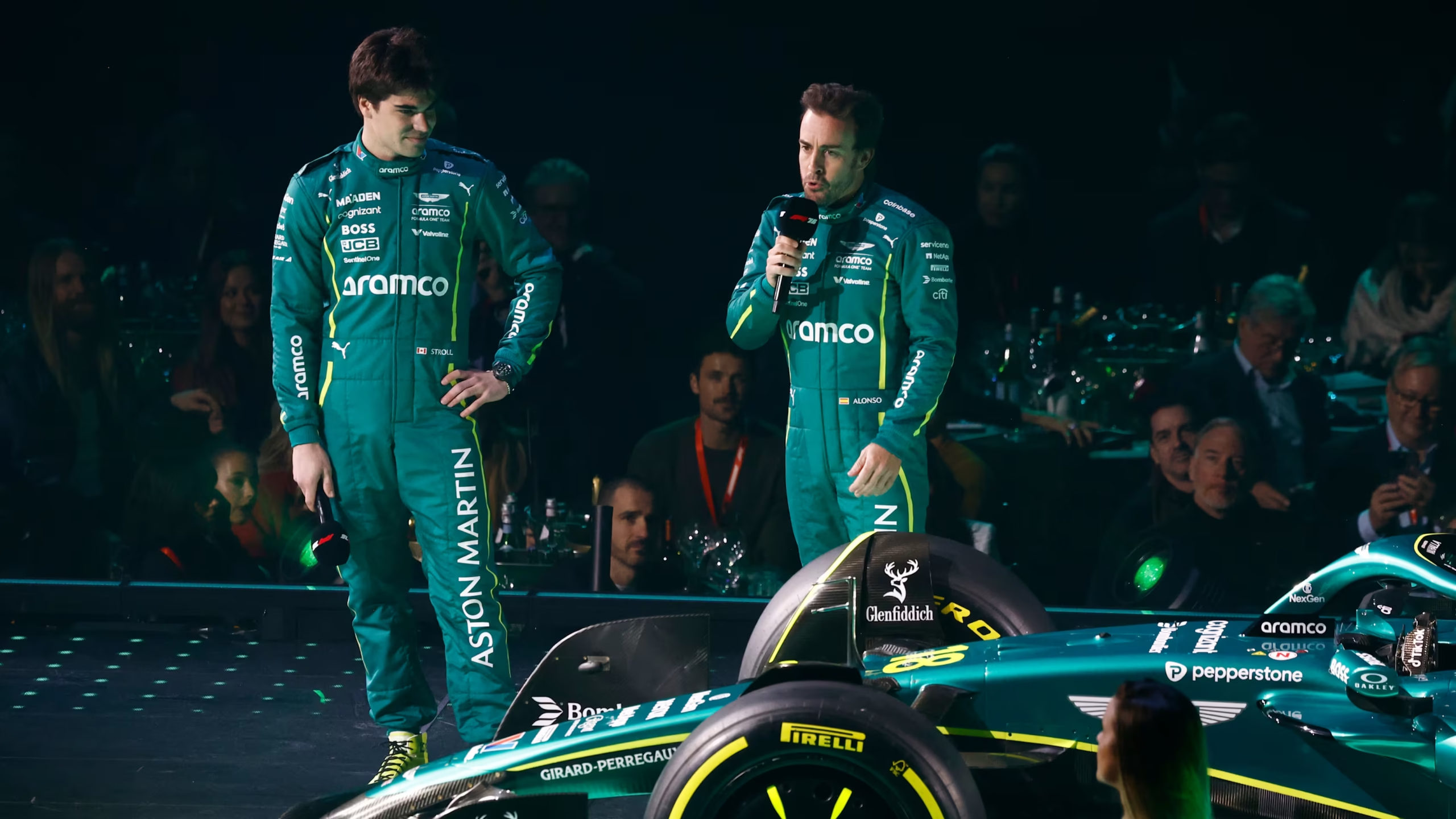
Aston Martin Lagonda’s decision to offload its 4.6% stake in the Aston Martin Formula One Team has put the team’s valuation at a remarkable $3.2 billion (£2.4 billion)—a figure that underscores the shifting commercial landscape of elite motorsport.
According to Insider Sport, the carmaker has signed a binding letter of intent to sell its minority stake for $146 million (£110 million). While the buyer remains unnamed, the implications are clear: even in a year where performance hasn’t matched expectation, F1’s commercial momentum is attracting serious capital.
For Aston Martin Lagonda, majority-owned by Lawrence Stroll’s Yew Tree consortium, the sale is rooted in financial necessity. Amid declining automotive sales, the divestment is a lifeline. But for the F1 team, now entering a transitional phase ahead of its 2026 engine partnership with Honda, it signals a more bullish future.
A Valuation Driven by Momentum, Not Medals
The $3.2 billion valuation is not about current podiums—it’s about future upside. F1’s global growth, boosted by the Netflix effect, a younger fanbase, and U.S. market penetration, has redefined team economics. Private equity, sovereign funds, and ultra-high-net-worth individuals are viewing F1 franchises more like sports-entertainment brands than technical racing outfits.
With Aston Martin’s car set to be designed by Adrian Newey and powered by Honda starting in 2026, the timing of this stake sale—while the valuation is peaking and just ahead of a transformative technical partnership—makes strategic sense. This could be the final call for investors to buy in before a performance surge.
Beyond the Racetrack: What This Means for Investors and Rightsholders
The Aston Martin sale highlights a fundamental truth in today’s motorsport investment climate: you’re not just buying into speed, you’re buying into storylines, reach, and rights.
1. F1 teams are being revalued as content assets:
With teams now generating year-round media narratives, lifestyle branding, and merchandise ecosystems, their valuation is increasingly based on cultural relevance as much as sporting results.
2. Minority stakes are a viable growth-market entry point:
For investors hesitant about full ownership, acquiring sub-10% stakes in F1 teams offers exposure to long-term upside with less governance complexity. Think of it as a luxury stock in a booming entertainment sector.
3. Engine partnerships reshape team trajectories:
Aston Martin’s future partnership with Honda adds a technological moat and a commercial catalyst. Much like Red Bull’s trajectory post-Honda, this could redefine Aston Martin F1’s value from 2026 onward.
Partner With Us
Want to feature your brand, business, or service on 365247 — Whether you’re looking to sponsor, collaborate, or build presence within our ecosystem, we’d love to explore it with you.
Submit Your Interest Here
IMAGE: F1