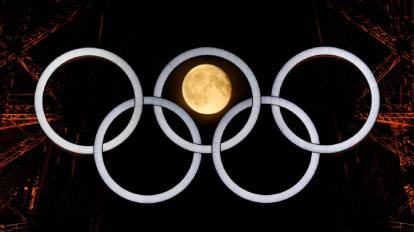
CREDIT: Sportcal
For over a century, the Olympic and Paralympic Games have traveled the world — but not entirely. Despite being the most globally inclusive sporting spectacle, the Games have never touched down in the Middle East or North Africa. That might change in 2036. And if Qatar has its way, it will.
With Los Angeles (2028) and Brisbane (2032) already secured as upcoming Olympic hosts, attention has turned toward what may be the most politically significant and commercially intriguing Games of the modern era. Qatar — fresh off the global visibility of the 2022 FIFA World Cup — is aggressively positioning itself to bring the Olympics to Doha in 2036, laying the groundwork for a Middle Eastern breakthrough.
A Region Yet to Host, A Nation That’s Ready
The IOC’s hosting history remains Euro-American centric, with few outliers. Since 1996, only two new countries — China in 2008 and Brazil in 2016 — have entered the Olympic host club. The logic? Infrastructure, audience, and stability. But global sport is changing. The 2022 World Cup proved that traditional assumptions about geography and scale are no longer valid barriers. Qatar successfully welcomed 3.4 million spectators, filling its stadiums to over 96% capacity. It wasn’t just a logistical achievement — it was a financial windfall, with FIFA generating over $6.3 billion in revenue and a record $929 million in ticketing and hospitality.
Those numbers speak loudly — especially to rights holders.
Beyond Sport: Positioning, Power, and Policy
Qatar’s case isn’t just about venues and logistics. It’s about redefining what a host city symbolizes. Doha’s pursuit of the Olympics is not merely a sporting ambition — it’s a national branding exercise on a global scale. With existing infrastructure already in place — from world-class stadiums to athlete villages — the country argues it’s a ready-made solution for an event that is becoming increasingly expensive and operationally complex for traditional Western hosts.
This pitch is underpinned by commercial opportunity. The 2022 World Cup brought new global partnerships to the fore — QatarEnergy, QNB, and, most notably, Qatar Airways, which now maintains a global sponsorship portfolio worth over $350 million annually. These entities have so far been absent from the IOC’s top-tier commercial partnerships. That could change with a Doha Games.
Commercial Growth, Cultural Conflict?
From a revenue standpoint, the IOC has reason to consider the Middle East seriously. The last Olympic cycle (2021-2024) brought in $7.7 billion in commercial revenue, and the 2033-36 cycle has already locked in $4 billion. Adding a new host region could unlock billions more — especially from untapped Gulf-based conglomerates and sovereign-linked brands seeking global alignment.
However, the road to Doha 2036 is not without controversy.
Qatar’s Olympic bid is shadowed by the same concerns that plagued the 2022 World Cup: allegations of ‘sportswashing,’ widespread criticism of human rights practices, and policies seen as regressive by much of the global community — particularly around migrant labor rights and LGBTQ+ representation. With homosexuality still criminalized in Qatar, critics argue the nation’s hosting ambitions are fundamentally at odds with the Olympic values of inclusivity, equality, and dignity.
Several international advocacy groups have already voiced opposition, pointing to the dissonance between Olympic ideals and Qatari policy frameworks. Still, the financial and geopolitical winds may be shifting. Just as FIFA faced a global reckoning and moved forward, the IOC could make a similarly pragmatic — or controversial — decision.
A Compact Games, A Bigger Message?
Interestingly, Qatar’s compact geography might actually serve the Olympic movement’s long-term goals. With sustainability and efficiency now front and center in IOC planning, a centralized, environmentally efficient Games — especially one utilizing existing infrastructure — could set a new precedent. Fewer flights, more consolidated zones, and logistical simplicity could mark a blueprint for future hosts — particularly as costs spiral for sprawling, multi-venue cities.
Final Word
The question isn’t just whether Qatar can host the Olympics — clearly, it can. The question is whether the IOC is prepared to confront, reconcile, or sidestep the ethical complexities that such a decision entails.
As global sport shifts towards emerging markets, hybrid commercial models, and soft-power geopolitics, Qatar’s bid may well define the future of mega-events. The 2036 Games will be about more than medals and ceremonies — they’ll be a referendum on what global sport chooses to value: expansion or principle, inclusion or profit.
Original reporting source: Sportcal
Partner With Us
Want to feature your brand, business, or service on 365247 — Whether you’re looking to sponsor, collaborate, or build presence within our ecosystem, we’d love to explore it with you.
Submit Your Interest Here
IMAGE: Reuters