When former U.S. President Donald Trump declared the United States would soon be selling “so much” beef to Australia, the comment lit up political headlines. But beyond the rhetoric, the economics of the beef trade paint a far more sobering picture.
Australia may have relaxed long-standing biosecurity restrictions on American beef imports, but analysts agree: a surge in U.S. beef exports to Australia is unlikely. Not because of diplomacy—but because of basic market math.
High Prices, Low Herds
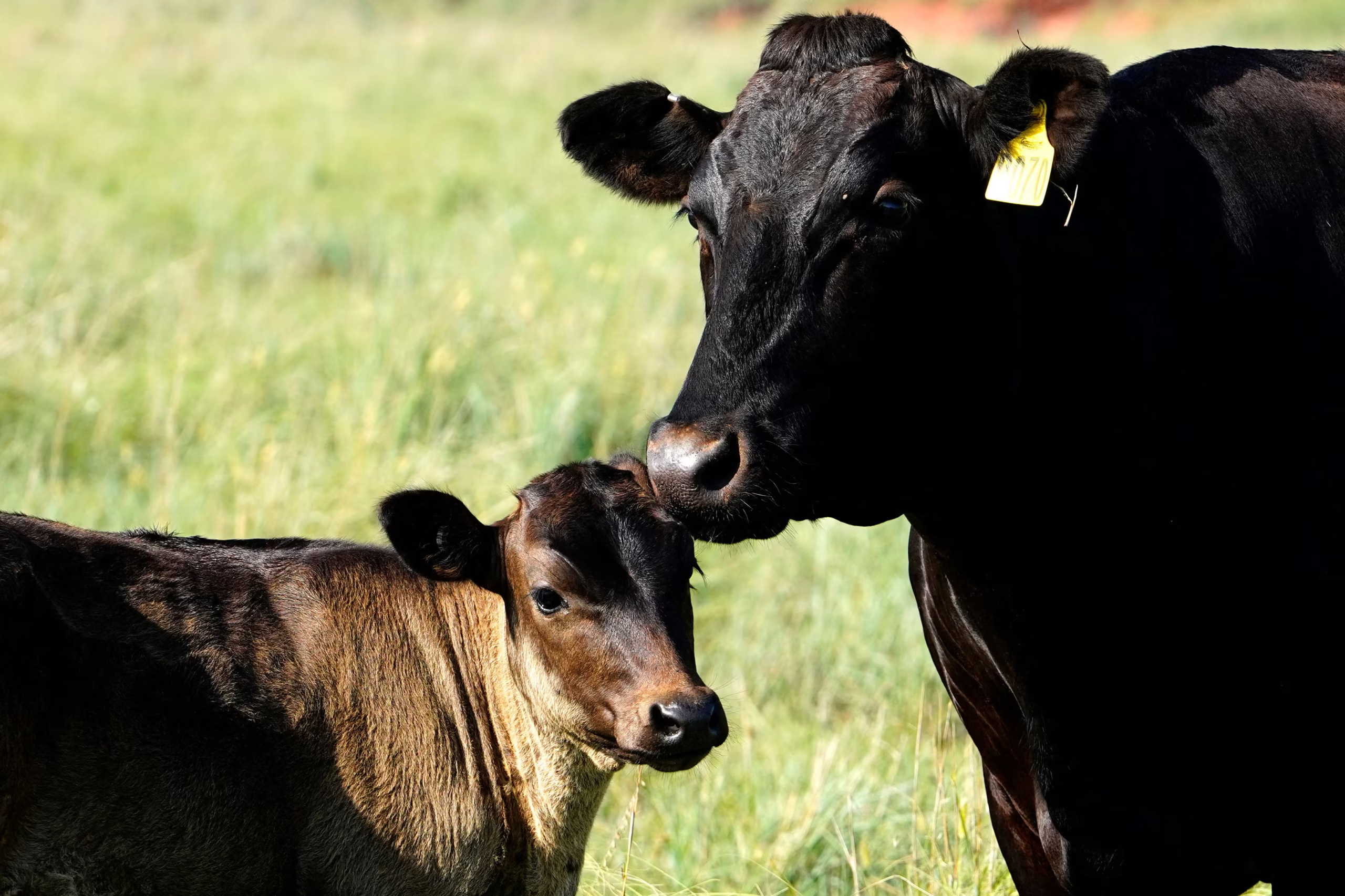
Right now, the U.S. is facing historically tight cattle supplies. Years of drought have shrunk grazing land and forced ranchers to reduce herd sizes to their lowest levels in decades. As of July 1, America’s total cattle herd dropped to just over 94 million—its smallest July herd count on record, per USDA figures.
With demand still high domestically, beef prices have soared to new records in 2024 and 2025. That makes U.S. beef expensive for global buyers—especially in Australia, a country that not only produces far more cattle than it consumes, but also does so at significantly lower costs.
A Trade Deficit in Meat
To put the trade imbalance into perspective: last year, Australia exported nearly 400,000 metric tons of beef to the U.S., worth nearly $3 billion. By contrast, U.S. beef exports to Australia totaled just 269 tons—less than one-thousandth of what came the other way.
Simply put, America buys Australian beef. Australia doesn’t really need American beef.
Lean Imports, Not Big Exports
The U.S. primarily imports lean Australian beef, often used in hamburger production. These imports are vital, especially as domestic beef production contracts and other sources—like Brazil—face new import tariffs and biosecurity issues (including the suspension of Mexican cattle due to disease concerns).
This means U.S. buyers are looking abroad to fill gaps—not selling more.
Taste Matters Too
There’s also the cultural factor. Australian consumers are generally accustomed to grass-fed, lean beef—a sharp contrast to the marbled, grain-fed cuts common in U.S. production. While the biosecurity change may allow American producers to technically access the market, that doesn’t mean there’s demand to match.
As one industry analyst put it, the idea that the U.S. will start significantly exporting beef to Australia over the next five years is “highly improbable.”
Political Optics vs Market Logic
Trump’s message this week, broadcast on his Truth Social platform, emphasized that “U.S. Beef is the Safest and Best in the entire World.” But behind the scenes, U.S. trade officials and agricultural economists are more measured.
Yes, Australia’s easing of trade restrictions represents a symbolic shift. But it’s not the start of a new export boom.
In reality, this is a story of two supply chains heading in opposite directions—one expanding globally, the other trying to stay afloat amid drought, disease, and high input costs.
Final Word
In the world of meat exports, bravado might grab headlines, but supply, demand, and taste determine the actual market outcome. Australia’s decision to open the door wider to U.S. beef may be a diplomatic win—but it’s unlikely to spark a flood of American exports.
For now, America’s beef challenge isn’t about selling more. It’s about finding enough to feed itself.
Partner With Us
Want to feature your brand, business, or service on 365247 — Whether you’re looking to sponsor, collaborate, or build presence within our ecosystem, we’d love to explore it with you.
Submit Your Interest Here
IMAGE: Reuters