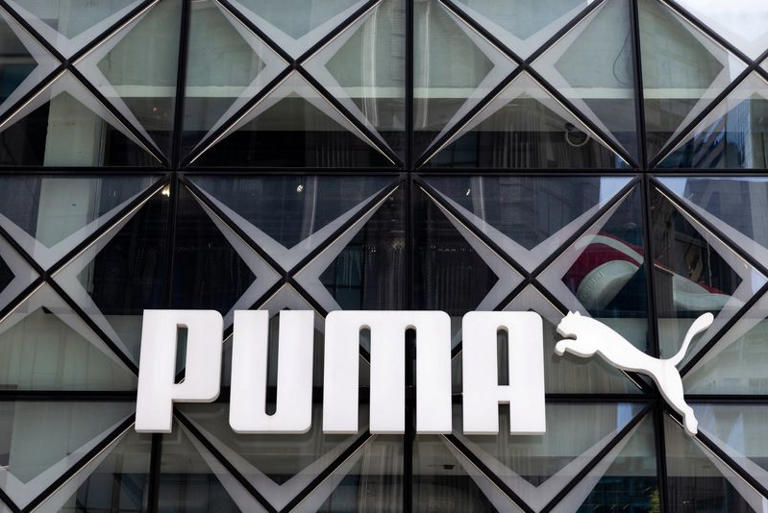
Global sportswear brand Puma has issued a stark warning: 2025 will bring both a sales decline and a bottom-line loss, shaking investor confidence and sending shares tumbling 18% at Friday’s market open.
After years of trying to carve out market share from giants like Nike and Adidas, the German company now faces a critical challenge—relevance.
The Fall of the Retro Playbook
Puma’s recent strategy leaned heavily on nostalgia, reviving silhouettes like the Speedcat and banking on the wave of retro sneaker culture. But customer interest hasn’t met internal expectations. In its latest quarterly update, the company cited “muted brand momentum,” especially in key markets like the US, where fashion trends are evolving rapidly and brand loyalty is fragile.
Instead of the modest growth once forecasted, Puma now expects annual sales to drop by at least 10%, translating to a “low double-digit” contraction in percentage terms. This marks a dramatic departure from its earlier guidance and puts pressure on new leadership to execute a turnaround plan under challenging conditions.
New CEO, Familiar Headwinds
The company has brought in Arthur Hoeld, the former global sales chief at Adidas, as its new CEO effective July 1. His appointment reflects a clear shift in focus: rebuilding the brand’s commercial strategy and reconnecting with younger, style-conscious consumers. Hoeld inherits a brand that is not only losing momentum but also navigating external pressures beyond its control.
One of those pressures? Tariffs. Like many in the industry, Puma sources heavily from Asia — including China, Vietnam, Cambodia, and Bangladesh — making its US-bound shipments vulnerable to trade policy shifts. The company estimates that recently imposed tariffs will shave approximately €80 million off its 2025 gross profits, even after efforts to optimise supply chains and adjust pricing.
Investor Sentiment Hits a Low
Market reactions have been swift and brutal. Analysts at J.P. Morgan described the revised guidance and quarterly miss as well below expectations, predicting further downgrades in consensus EPS and continued downward pressure on the stock.
The sell-off reflects a broader investor anxiety not just about Puma’s near-term numbers, but its long-term brand positioning. With Nike doubling down on athlete partnerships and Adidas leaning into high-fashion collaborations, Puma finds itself without a clear identity — or a flagship campaign that can capture global attention.
Puma’s predicament is emblematic of a broader truth in today’s brand economy: product isn’t enough. In a saturated market, storytelling, culture relevance, and emotional resonance are just as critical as design and pricing. If Puma is to regain momentum, it needs more than a new CEO — it needs a new narrative.
Partner With Us
Want to feature your brand, business, or service on 365247 — Whether you’re looking to sponsor, collaborate, or build presence within our ecosystem, we’d love to explore it with you.
Submit Your Interest Here
IMAGE: Reuters