Credit: Front Office Sports
While some of college sports’ biggest conferences are cooling on private capital, the Big Ten is still doing its homework.
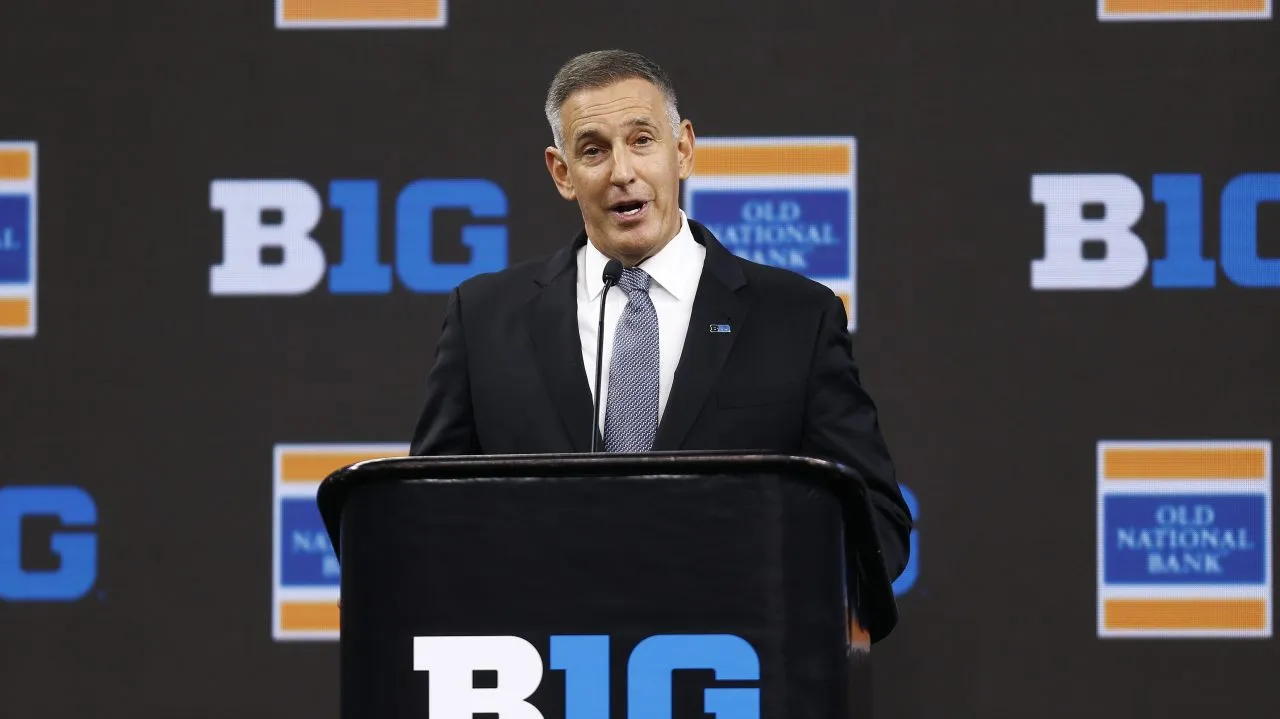
In an exclusive conversation with Front Office Sports, Big Ten Commissioner Tony Petitti confirmed that the league is actively evaluating what a private equity structure could look like—months after initial reports suggested early-stage interest. According to Petitti, the goal isn’t just to raise funds, but to determine how such a financial mechanism could be meaningfully integrated into the Big Ten’s business architecture.
“We’re still thinking about what that could mean,” he said, underlining that no single framework has yet emerged as definitive. “It’s a long way from crystallizing.”
Why This Matters Now
Private equity in college sports is no longer just a theoretical idea. It’s part of a larger strategic conversation—especially post-House v. NCAA.
That landmark settlement, approved in June, cleared the way for revenue sharing with athletes. Schools opting in are expected to pay up to $20.5 million annually. And while that marks a huge step in athlete compensation, it’s also forcing athletic departments and conferences to revisit revenue models that have remained largely traditional—media rights, gate receipts, and donor contributions.
Private equity presents a compelling, albeit complex, solution. Structured the right way, it could unlock long-term capital for infrastructural expansion, media innovation, or performance-based equity pools, without sacrificing control.
But the hesitation is real—and it’s spreading.
Power Conferences Hitting Pause
ACC Commissioner Jim Phillips noted this week that while the conference remains educated and open to the concept, nothing meaningful has materialized. “There just hasn’t been anything that really has made sense,” he told Front Office Sports, suggesting cautious exploration without immediate action.
Big 12 Commissioner Brett Yormark was even more direct. The idea was paused as of May, and remains shelved today. “The board’s not ready right now,” he said.
As for the SEC, Commissioner Greg Sankey shared that while no viable model has landed on his desk, the door isn’t shut forever. “We’ve not seen the concept that works,” he said, while hinting openness to revisiting the idea under different conditions.
Private Equity at the School Level? Already Happening
Although conferences may be treading carefully, individual universities aren’t waiting.
Elevate Sports Ventures recently announced a $500 million private capital initiative—with at least two schools already signed on. Others could soon follow. Boise State’s Athletic Director Jeramiah Dickey said he anticipates entering into some form of private equity arrangement within the next six months.
365247 Take: This Is the Inflection Point
The Big Ten’s willingness to continue the private capital conversation—even without a blueprint—signals a long-term shift. As college sports face unprecedented financial restructuring, particularly with revenue-sharing obligations looming, the need for innovative capital strategies is now urgent.
Private equity won’t work for everyone. But for conferences with scale, identity, and strong media footprints, it could evolve into a strategic growth mechanism—if they can balance control with capital.
For the Big Ten, the thinking hasn’t stopped. And in this business, that’s a signal worth watching.
Join the 365247 Community: https://forms.gle/JhqZQCej4SrdpMdt8
Partner With Us
Want to feature your brand, business, or service on 365247 — Whether you’re looking to sponsor, collaborate, or build presence within our ecosystem, we’d love to explore it with you.
Submit Your Interest Here
IMAGE: Getty Images