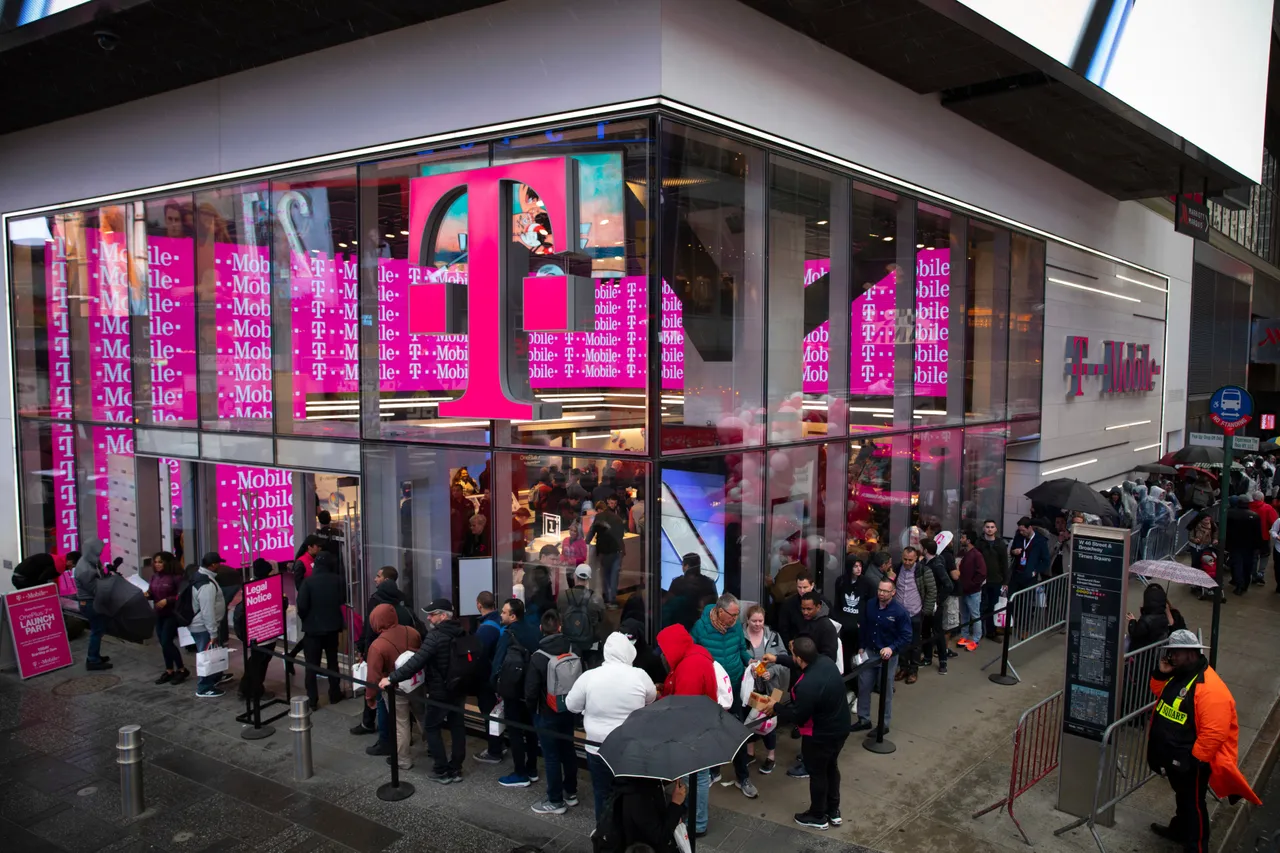
T-Mobile US has once again asserted itself as the telecom industry’s performance benchmark, reporting a blockbuster Q2 that underscores its evolution from a scrappy challenger into the dominant growth story in American wireless.
The company added 830,000 postpaid phone subscribers between April and June 2025—more than double AT&T’s tally and vastly outpacing Verizon, which posted subscriber losses during the same period. When factoring in all postpaid categories, T-Mobile’s total net additions reached 1.7 million—its best-ever second quarter and the strongest across the U.S. wireless sector.
Even in the highly contested fixed wireless access (FWA) space, T-Mobile extended its lead. The operator gained 454,000 new 5G home broadband customers, up 12% year-on-year, pushing its total FWA base to 7.3 million subscribers. As cable broadband faces stagnation, T-Mobile’s position in home connectivity is fast becoming a strategic differentiator.
CEO Signals Confidence Amid New Highs
CEO Mike Sievert highlighted that T-Mobile isn’t just growing faster—it’s monetizing better. The company’s service revenue hit $17.4 billion, a 6% rise from the previous year, with postpaid revenue climbing a notable 14% to $14.1 billion. Core adjusted EBITDA reached $8.5 billion (up 6%), and net income increased 10% to $3.2 billion. Adjusted free cash flow grew to $4.6 billion, another quarterly record.
This performance led the company to revise its full-year guidance upward, signaling confidence not just in subscriber momentum, but in financial execution.
Strategic Moves: Metronet and the Fibre Future
T-Mobile’s expansion is no longer confined to wireless. With the FCC recently approving its acquisition of fibre broadband provider Metronet, the operator is stepping directly into a future where converged connectivity—mobile, home, and satellite—will define market leadership. Although fibre contributed little to Q2 results, its inclusion in forward-looking forecasts signals a strategic pivot that goes beyond fixed wireless dominance.
UScellular Still in the Pipeline
While the deal to acquire UScellular is still awaiting closure, the Department of Justice has already given the green light. Once finalized, T-Mobile will gain further spectrum depth and rural market access, setting the stage for another round of upward revisions in both subscriber and financial forecasts.
Outlook and Implications
For the full year, T-Mobile now projects core adjusted EBITDA between $33.3 billion and $33.7 billion—marginally up from prior expectations. But the real upgrade is in customer acquisition guidance: the company expects 6.1–6.4 million net postpaid additions, up from 5.5–6 million. This includes 2.95–3.10 million phone customers and approximately 100,000 fibre net additions.
Notably, Q2 also coincided with the commercial launch of T-Satellite in partnership with Starlink—a move that could, in time, allow T-Mobile to expand its connectivity footprint to previously unreachable geographies and diversify its revenue base beyond traditional subscriber metrics.
The Bigger Picture
T-Mobile’s Q2 isn’t just a strong quarter—it’s a strategic statement. With a growing presence in home broadband, an upcoming fibre portfolio, and ambitions in satellite, the company is evolving into a full-spectrum connectivity provider. Its ability to convert network investments into sustained customer and financial growth makes it not only the U.S. telecom leader for now, but perhaps the blueprint for global operators navigating the convergence era.
Partner With Us
Want to feature your brand, business, or service on 365247 — Whether you’re looking to sponsor, collaborate, or build presence within our ecosystem, we’d love to explore it with you.
Submit Your Interest Here
IMAGE: T-Mobile