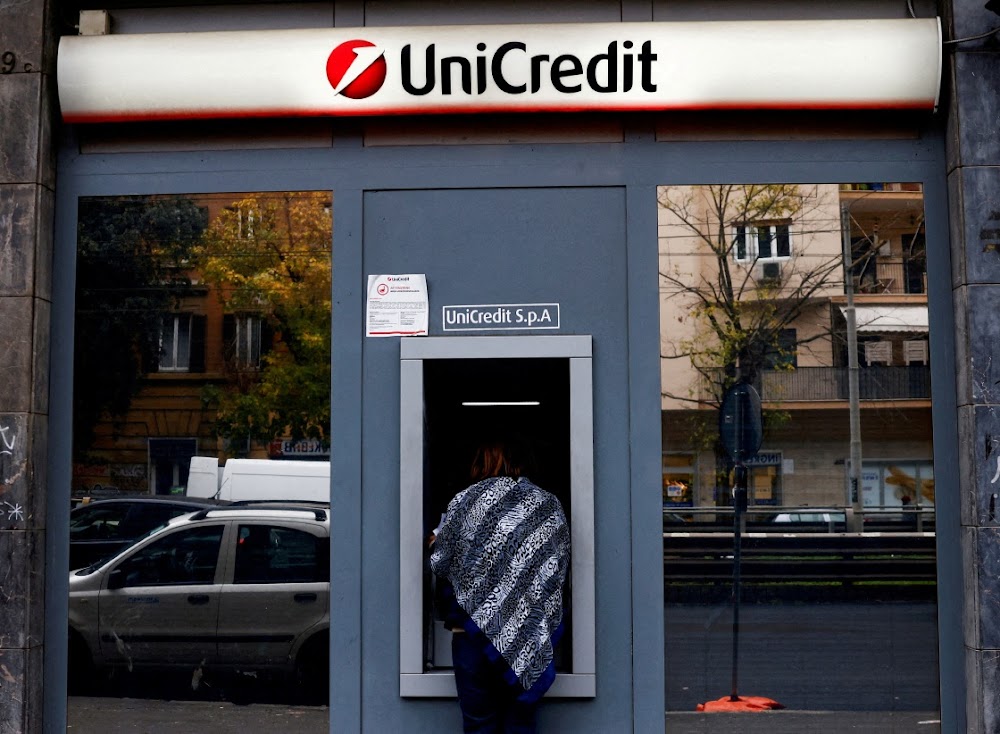
UniCredit, Italy’s second-largest bank, has shifted gears — decisively pulling out of its proposed takeover of Banco BPM and instead doubling down on operational consolidation and profit growth.
The bank’s CEO, Andrea Orcel, confirmed the end of UniCredit’s pursuit of BPM, citing government intervention that, in his words, undermined the deal’s potential for value creation. This marks the second time Orcel’s ambitions for transformative Italian banking consolidation have been derailed, following the earlier breakdown of talks to acquire Monte dei Paschi in 2021.
Despite a recent court ruling in UniCredit’s favour and the anticipated support from EU competition authorities, the combination failed to progress — blocked in part by the increased stake held by France’s Crédit Agricole, which has been quietly edging toward regulatory approval to raise its holding in Banco BPM to nearly 30%. That move, with the Italian government’s nod, effectively sidelined UniCredit’s expansion bid.
This situation echoes a broader European pattern where governments are increasingly involved in regulating banking sector consolidation. Recent friction in Spain, where BBVA’s move for Sabadell met similar resistance, underscores the geopolitical dimension of modern financial M&A — where national interests often override boardroom strategies.
In response, Orcel has reoriented UniCredit’s growth playbook. No new large-scale M&A is expected. Instead, the bank will focus on internal efficiencies, value extraction from its existing cross-border investments, and careful portfolio management — especially regarding its significant stakes in Germany’s Commerzbank and Greece’s Alpha Bank.
UniCredit has upgraded its financial outlook accordingly. The bank now forecasts 2025 net profits to reach approximately €10.5 billion — a notable increase from its earlier €9.3 billion projection. A further uplift to over €11 billion is expected by 2027, supported by consistent cost discipline, stable interest income, and refined asset positions.
In the second quarter of 2025, UniCredit delivered €3.3 billion in net profit including exceptional items — exceeding both its internal benchmarks and market expectations. Operational revenue is projected to dip slightly in the short term, falling from €24.8 billion in 2024 to €23.5 billion this year, though overall profitability remains strong.
Strategically, UniCredit has committed to returning at least €30 billion to shareholders between 2025 and 2027. This includes a balanced mix of cash dividends and share buybacks, with any adjustments to the plan contingent on future acquisition dynamics.
The bank did take a financial hit — €335 million — related to the unwinding of hedges linked to its Commerzbank investment. However, this was partially offset by accounting gains tied to its deeper integration of life insurance partnerships and the mark-to-market valuation of its initial 9.9% Commerzbank holding.
In essence, UniCredit’s latest manoeuvres suggest a pragmatic shift: away from politically sensitive expansion and toward maximising shareholder value through consolidation, efficiency, and tactical growth. In a European banking sector fraught with government influence and nationalist capital strategies, such clarity may prove to be its sharpest asset.
IMAGE: Wall Street Journal