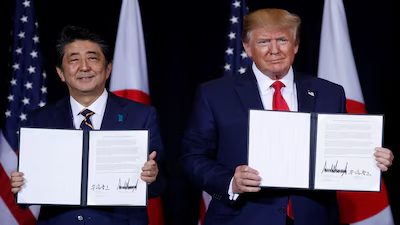
In a significant development for international trade, the United States and Japan have finalized a wide-ranging economic agreement aimed at easing tariffs and increasing bilateral investment. The deal marks a key moment in U.S. trade policy and comes ahead of a critical deadline for new tariffs.
Key Provisions of the Agreement
The agreement includes a reduction in tariffs on Japanese auto imports to 15%, down from a combined rate of 27.5%. In return, Japan has committed to a substantial investment and financing initiative for U.S.-bound projects, valued at approximately $550 billion. This includes contributions from government-backed institutions and is intended to support the buildout of resilient supply chains in strategic sectors like semiconductors and pharmaceuticals.
Additionally, Japan has agreed to increase its purchases of U.S.-produced goods, including agricultural commodities and defense-related products. Annual defense procurement from U.S. firms will rise to $17 billion, while Japan also committed to purchasing 100 aircraft from an American manufacturer.
Market Reaction and Strategic Impact
The announcement triggered a positive response in financial markets. Japan’s Nikkei stock index surged nearly 4%, led by gains in major automotive manufacturers. In the U.S., equity indices opened higher amid optimism about continued trade progress with other nations.
This trade agreement is one of several the U.S. administration is pushing to finalize ahead of an August 1 deadline, when new rounds of tariffs are scheduled to take effect. Japan’s Prime Minister and central bank officials praised the agreement for reducing trade-related uncertainty and for safeguarding key domestic industries such as agriculture.
Implications for the Global Trade Landscape
The deal is part of a broader shift in U.S. trade strategy that prioritizes reciprocal market access and large-scale foreign investment. Japan remains the largest foreign investor in the United States, with an investment position of $819 billion at the end of 2024.
While the agreement focuses heavily on autos, defense, and agriculture, separate negotiations are underway for critical sectors such as semiconductors and pharmaceuticals. Japan has also agreed to relax certain non-tariff barriers that previously affected U.S. vehicle sales in its domestic market.
Industry Response
While the financial markets responded favorably, some U.S. automotive stakeholders have expressed concern. Industry representatives argue the new tariff structure could disadvantage American-made vehicles from North American production hubs, which still face higher levies.
Despite these reservations, the U.S.–Japan deal is being positioned as a model for future agreements with other trading partners. Talks with European and Southeast Asian countries are reportedly ongoing.
IMAGE: Reuters