While India’s real estate headlines often revolve around sky-high prices and stalled construction, a quieter yet deeply strategic transformation is underway — led by one of the country’s most recognizable business names.
Gautam Adani, globally known for his energy, ports, and infrastructure empire, is now turning his attention toward reshaping the fabric of Indian urban living. And unlike the high-decibel narratives that usually accompany megaprojects, this push is unfolding with deliberate intensity.
At the heart of it is Adani Realty, now among the most prominent property developers in India — recently estimated at a $1.5 billion valuation for the first time. But this isn’t a story about high-rise luxury apartments alone. It’s about leveraging scale, governance access, and execution capabilities to redraw the urban development playbook in the country’s financial capital.
Dharavi: The Test Case That Could Redefine Urban India
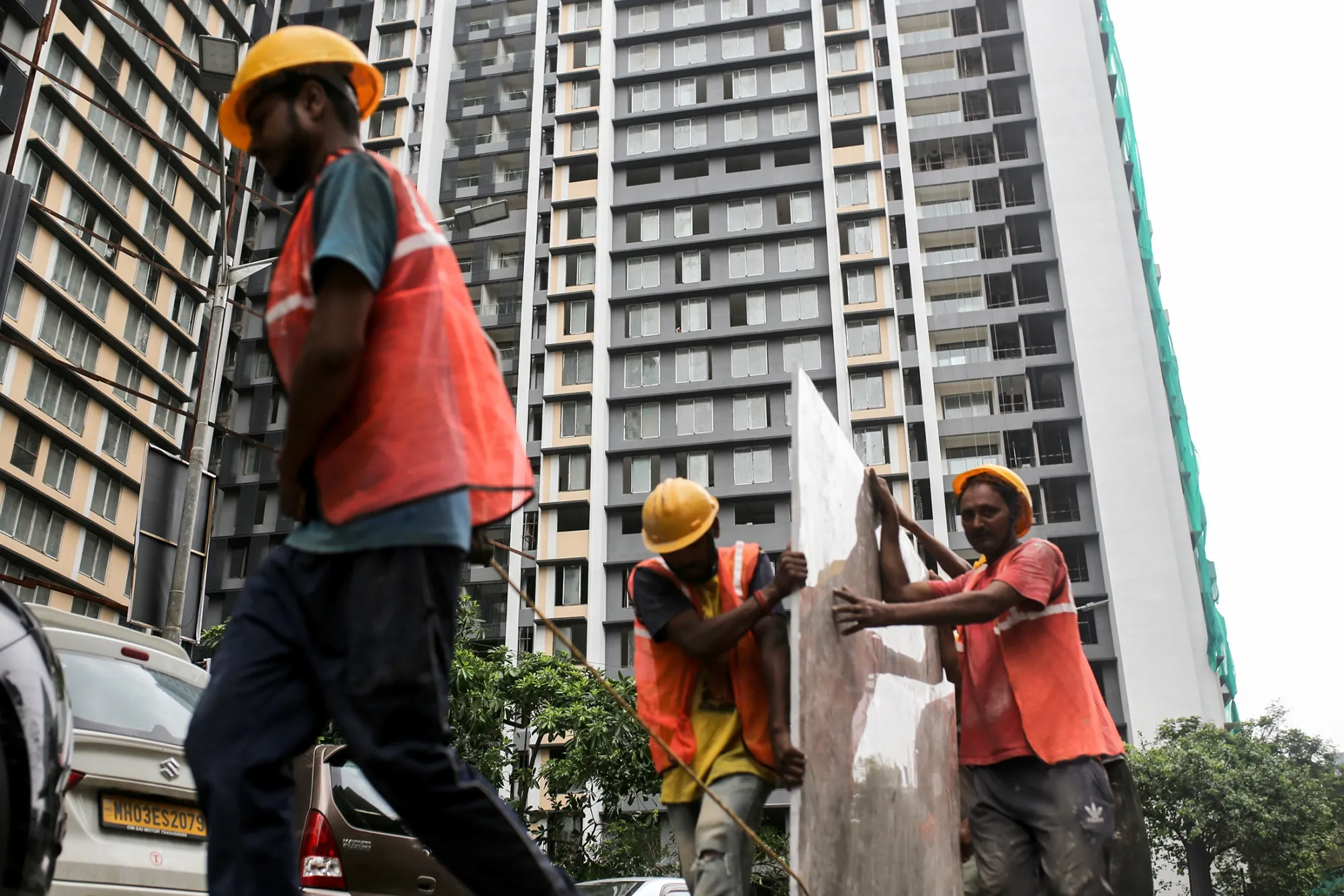
Few redevelopment projects in modern India have the scale or complexity of Dharavi, a dense and sprawling settlement that has become both a humanitarian challenge and an urban paradox. In 2022, Adani Realty won the right to lead the area’s transformation — a massive undertaking involving the resettlement of over 1 million people across a 150-acre stretch.
Backed by a projected $11 billion investment over seven years, the plan includes housing, commercial zones, and civic infrastructure. The revenue potential from commercial real estate alone is estimated to reach $14 billion, but the broader impact could extend far beyond balance sheets.
Through Navbharat Mega Developers Pvt. Ltd., a special purpose vehicle in which Adani holds an 80% stake (with the state government retaining the rest), the group will be responsible for development and upkeep — offering a rare fusion of public-private collaboration on this scale.
The High-Risk, High-Reward Equation
For all its promise, the Dharavi project isn’t without friction. From land rights disputes to relocation logistics and political scrutiny, the execution risks are substantial. Urban regeneration at this scale is inherently contentious, and the timelines are long. Still, Adani’s appetite for complexity may be part of the strategy.
The group has weathered reputational storms before — most notably, the 2023 Hindenburg Research allegations — and is now placing emphasis on consistent delivery and nation-building optics. In that context, Dharavi serves not just as a real estate play, but as a reputational pivot.
Beyond Dharavi: Acquisitions, Government Alliances & Opportunistic Expansion
Dharavi may dominate headlines, but Adani Realty is scaling rapidly across Mumbai — and with a distinct strategy. The firm has targeted distressed assets and revival of stalled projects, acquiring them at sharp discounts and rebuilding them under a more efficient operating structure.
One example: the acquisition of bankrupt Radius Estates in 2023, which enabled Adani to revive the once-hyped but shelved Ten BKC luxury project — a $530 million development in Bandra Kurla Complex — for just $9 million in acquisition cost.
Simultaneously, the group is securing large-scale, government-backed redevelopment projects. These include a $4.1 billion affordable housing complex in Mumbai’s northern suburbs and a $3 billion mixed-use site in upscale Bandra West. It is also leveraging its existing airport infrastructure to unlock surrounding land for commercial use, including offices, hospitality, and entertainment.
Further strategic acquisitions — such as a potential move to acquire Jaiprakash Associates Ltd. — are in the pipeline, suggesting a broader plan to integrate real estate more deeply into the Adani ecosystem.
The Urban Future is Being Negotiated Now
In many ways, Adani’s move into real estate echoes global trends — where conglomerates and infrastructure players are blending real assets with long-term urban planning. But in India, where the real estate market has historically been fragmented and opaque, the consolidation of capacity, capital, and credibility could prove game-changing.
As Mumbai’s infrastructure expands and its urban center of gravity shifts, the scale at which Adani Realty operates could shape how — and where — future generations live.
In the words of Gautam Adani at a recent shareholder meeting:
“We are not just constructing buildings — we are building ecosystems with transit, healthcare, education, and open spaces.”
Whether this is legacy-making or merely smart real estate investing depends on execution. But what’s clear is this: the rules of urban transformation in India are being rewritten — and the Adani Group is holding the pen.
IMAGE: Bloomberg