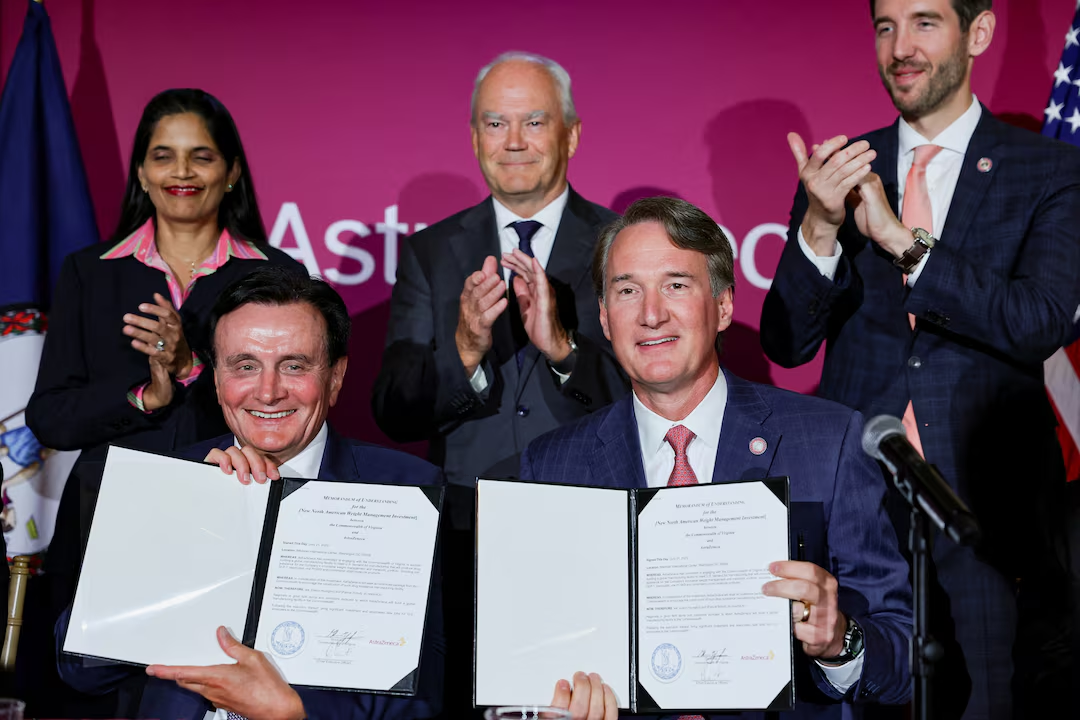
AstraZeneca has unveiled plans to invest a staggering $50 billion in the United States by 2030, as the British-Swedish pharmaceutical giant intensifies its R&D and manufacturing footprint across the country. This bold commitment is more than just a capital deployment—it’s a clear indicator of how the U.S. is reshaping itself as the nucleus of global pharmaceutical innovation and production.
At the heart of this investment is a planned multi-billion dollar manufacturing facility in Virginia focused on producing drug substances tied to chronic diseases like obesity and cardiovascular conditions. This site will be the company’s largest single manufacturing investment to date—symbolic of both its scale and strategic ambition. It will serve as the production engine for emerging therapeutics across AstraZeneca’s pipeline, including small molecules, peptides, and oligonucleotides, all vital components in next-generation treatments.
Transforming Charging Time into Brand Time
The investment is not just about bricks and mortar. AstraZeneca’s approach is to embed cutting-edge AI, automation, and data-led operations into its facilities, transforming them into next-gen manufacturing hubs. These facilities will support the company’s expanding portfolio in weight management and metabolic disorders, areas that have become high-growth focal points for the pharmaceutical industry.
Beyond Virginia, the investment spans a series of expansions and upgrades across the U.S., including:
- Enhanced R&D capacity in Maryland and Massachusetts
- Advanced cell therapy manufacturing units in California
- Upgrades in specialty and continuous manufacturing in Indiana and Texas
- Additional clinical trial supply chain infrastructure
Taken together, these initiatives reflect a calculated move to secure more of AstraZeneca’s pipeline development and production within U.S. borders, aligning with growing global sentiment around localized, secure supply chains for critical medicines.
Strategic North Star: $80 Billion Revenue Target
This announcement aligns with AstraZeneca’s public ambition of reaching $80 billion in annual revenue by 2030. Half of that is projected to come from the U.S.—a market that remains central to the company’s future, not just in terms of sales, but also innovation, regulatory alignment, and high-skill job creation.
For the U.S., this move represents more than foreign direct investment—it’s a validation of America’s positioning as a high-tech biopharma powerhouse. Officials in Virginia have welcomed the announcement as a major boost for advanced manufacturing and the skilled jobs ecosystem.
The Bigger Picture: Pharma as a Geopolitical Asset
AstraZeneca’s investment should also be read through a geopolitical lens. With increasing scrutiny on supply chain dependencies, particularly in health and pharmaceuticals, this investment helps address the structural weaknesses exposed during recent global disruptions. It’s also a pre-emptive alignment with potential industrial policy shifts that favour domestic production of critical drugs and ingredients.
For other pharma giants, the message is clear: the playbook for growth now requires more than blockbuster drugs—it demands control of the innovation and production lifecycle within trusted, stable jurisdictions.
This is no longer just pharma. It’s industrial strategy at scale.
IMAGE: Reuters