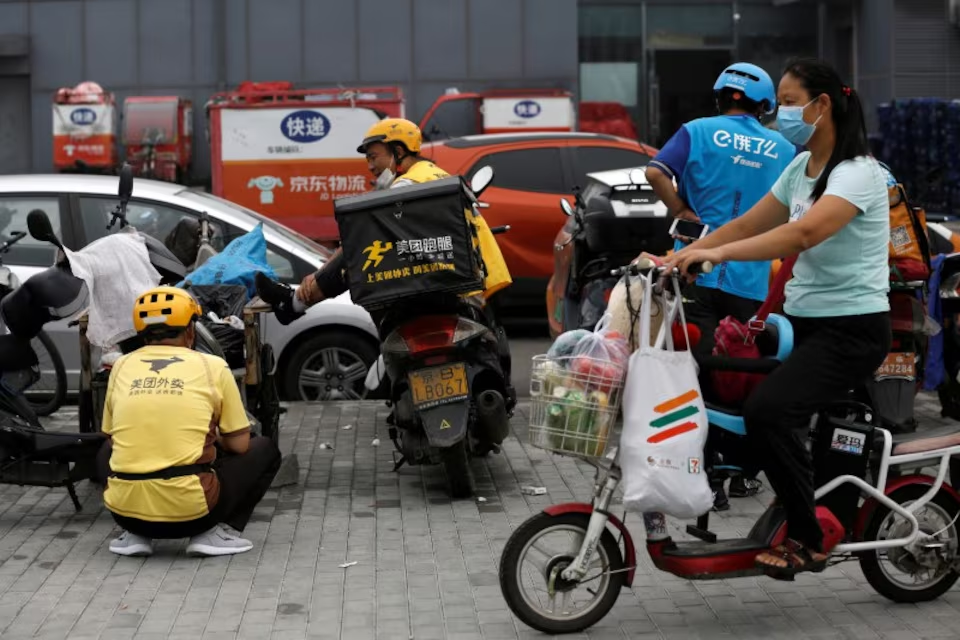
China’s ecommerce titans are reshaping the rules of retail as they compete to dominate the country’s booming instant delivery market. In 2025, JD.com, Alibaba, and Meituan are not just selling goods—they’re racing the clock.
What was once an optional premium service is now a national expectation: delivery in 60 minutes or less. From hot meals to household electronics, instant gratification is the new consumer baseline. In response, China’s ecommerce majors are scaling operations with historic urgency, unleashing subsidies, and building the infrastructure of a logistics future.
Unprecedented Order Volumes and Infrastructure Scaling
- Meituan hit an industry record with over 150 million daily orders in July 2025.
- Alibaba’s Taobao Instant Commerce, which expanded nationwide earlier this year, now surpasses 80 million orders a day.
- JD.com, leveraging its deep logistics DNA, continues to refine its one-hour delivery model through proprietary fulfillment centers and rider networks.
To meet demand, these platforms are investing in:
- Smart inventory systems
- Hyperlocal warehouses
- Real-time tracking and route optimization
- Massive delivery workforces powered by algorithms
Price War: The Billion-Yuan Battle for Loyalty
The race isn’t just about logistics—it’s about who can offer the cheapest, fastest service. The leading players have launched aggressive subsidy campaigns:
- JD.com and Alibaba each committed ¥10 billion (approx. $1.38 billion) to delivery promotions.
- Meituan and Alibaba separately announced ¥50 billion ($7 billion) worth of subsidies aimed at attracting both consumers and merchants.
From ¥20 meal discounts to near-zero delivery fees, the platforms are absorbing short-term losses to build long-term dominance—using scale and stickiness as their key weapons.
Policy Scrutiny and Stakeholder Balance
While consumers reap the benefits, regulators are watching. The Chinese government has encouraged “orderly competition” and is monitoring:
- Margin compression across platforms
- Treatment of riders and gig workers
- Fair business practices toward SMEs
The growing importance of rider welfare and merchant viability is forcing platforms to balance ultra-fast growth with broader sustainability.
What the Delivery Wars Signal for Global Retail
The transformation underway in China’s ecommerce market is a glimpse into the future of retail logistics worldwide:
- Speed as Differentiator: Delivery windows are now measured in minutes, not days—reshaping global customer expectations.
- Data-Driven Infrastructure: Platforms that master real-time logistics data will hold a lasting edge.
- Platform-Led Ecosystems: Loyalty is shifting from individual brands to delivery platforms that own the full user journey.
IMAGE: Reuters