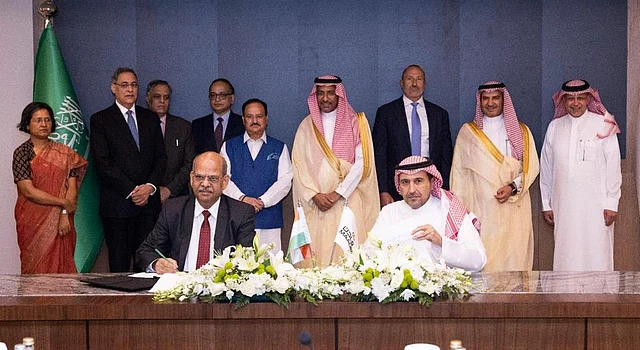
In a significant step toward enhancing India’s agricultural security and supply chain resilience, three leading Indian entities — Indian Potash Limited (IPL), Krishak Bharati Cooperative (KRIBHCO), and Central Insecticides Laboratory (CIL) — have signed long-term agreements with Saudi Arabia’s state-owned mining company, Maaden, for the annual import of diammonium phosphate (DAP) fertilisers.
The Deal at a Glance
Announced during Indian Chemicals and Fertilisers Minister JP Nadda’s official visit to Saudi Arabia (July 11–13), the agreement will secure an annual supply of 3.1 million metric tons of DAP for a five-year term starting from FY 2025-26. A provision to extend the deal for an additional five years upon mutual agreement further strengthens its long-term value.
This move not only enhances bilateral trade relations between the two countries but positions India to buffer against fertiliser supply shocks from other major sources — particularly China.
Why This Matters
DAP fertiliser is crucial for Indian agriculture, especially for high-value crops such as fruits and vegetables. With India’s annual fertiliser demand hovering around 10–11 million tons and more than 60% of it met through imports, securing a long-term supply chain is a strategic necessity.
India’s recent import volume of 1.9 million metric tons of DAP from Saudi Arabia in FY25 represented a 17% increase over FY24, and this new agreement will nearly double that volume — at a time when China has tightened controls on its fertiliser exports without issuing a formal ban. China currently supplies 80% of India’s speciality fertilisers, making diversification essential.
Strategic Bilateral Collaboration
To drive this momentum further, a joint working group has been established, co-led by the Secretary (Fertiliser) from India and the Vice Minister for Mining Affairs from Saudi Arabia’s Ministry of Industry and Mineral Resources. The group will explore collaborative frameworks not just for DAP, but also for other critical fertilisers like urea, with an eye on long-term, diversified supply chain strategies.
During the trip, Minister Nadda also visited Maaden’s state-of-the-art phosphate plant in Ras Al Khair — a reaffirmation of India’s growing reliance on Saudi Arabia’s industrial and resource capabilities.
IMAGE: JP Nadda