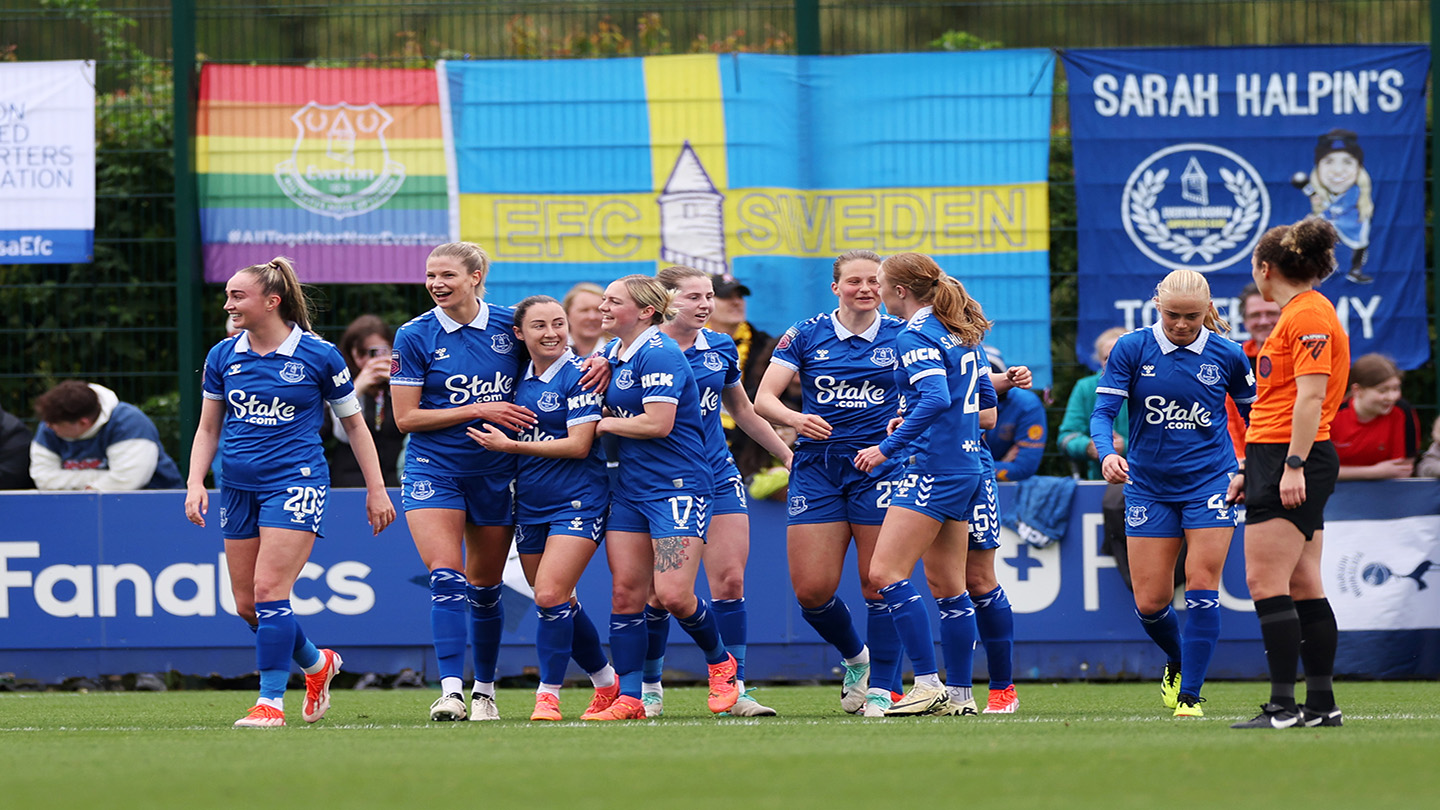
Everton Football Club has quietly taken steps to structurally separate its women’s team — a move widely seen as preparation for a potential sale in response to ongoing financial pressure under the Premier League’s Profit and Sustainability Rules (PSR).
According to filings with the UK’s Companies House on 29 May, a new legal entity titled EFCW Holdings Company Ltd has been incorporated and registered at Goodison Park — the club’s historic home ground. This follows Everton’s recent punishment for breaching PSR, which resulted in an eight-point deduction during the 2023–24 season.
With the men’s side preparing to relocate to their new stadium at Bramley-Moore Dock, Goodison Park is set to become the permanent home of Everton Women, increasing the physical and symbolic separation of the club’s two operations.
The PSR Ripcord: Financial Safety or Strategic Leverage?
Leading football finance expert Stefan Borson has described this legal restructuring as a “rip cord” strategy — a financial contingency clubs now keep within reach. As observed in Aston Villa’s last-minute sale of their women’s team before their accounting deadline on 30 June, such moves are becoming increasingly normalized in order to balance books without selling key first-team assets.
“You want to have [the women’s team sale] as your rip cord,” Borson explained. “In a scenario where something goes wrong… you want that option and the availability of it. For Everton, one of the clubs known to have breached PSR, having this rip cord ready makes sense.”
While this doesn’t necessarily confirm an imminent sale, the infrastructure is now in place to execute one rapidly should Everton require urgent capital or financial compliance.
Everton’s new ownership under Dan Friedkin may view this as a strategic tool — a lever that could be pulled at any point over the next financial cycle if their PSR margin tightens again.
What This Signals for Football Finance and Club Strategy
This development is more than an isolated boardroom maneuver — it represents a growing trend in club governance where women’s teams are becoming tradable financial assets within larger sporting enterprises.
At 365247 Consultancy, we’re tracking this as part of a broader shift where football clubs behave more like diversified business groups — compartmentalizing assets, assigning valuation benchmarks, and preparing for structural transactions. While the growth of women’s football deserves celebration, its rising commercial value is also attracting ownership decisions driven by PSR compliance, investor flexibility, and balance sheet optimization.
For clubs, legal separation of departments (men’s team, women’s team, academy, commercial subsidiaries) is becoming a strategic necessity in a post-PSR era. This modular structure opens pathways for:
- Independent funding or sales of individual departments
- Rapid responses to unforeseen financial shortfalls
- Strategic investment in women’s teams as standalone commercial products
As Everton prepares for a new era under the Friedkin Group, their PSR navigation strategy is a case study in how ownership groups are evolving their asset management philosophies in professional football.