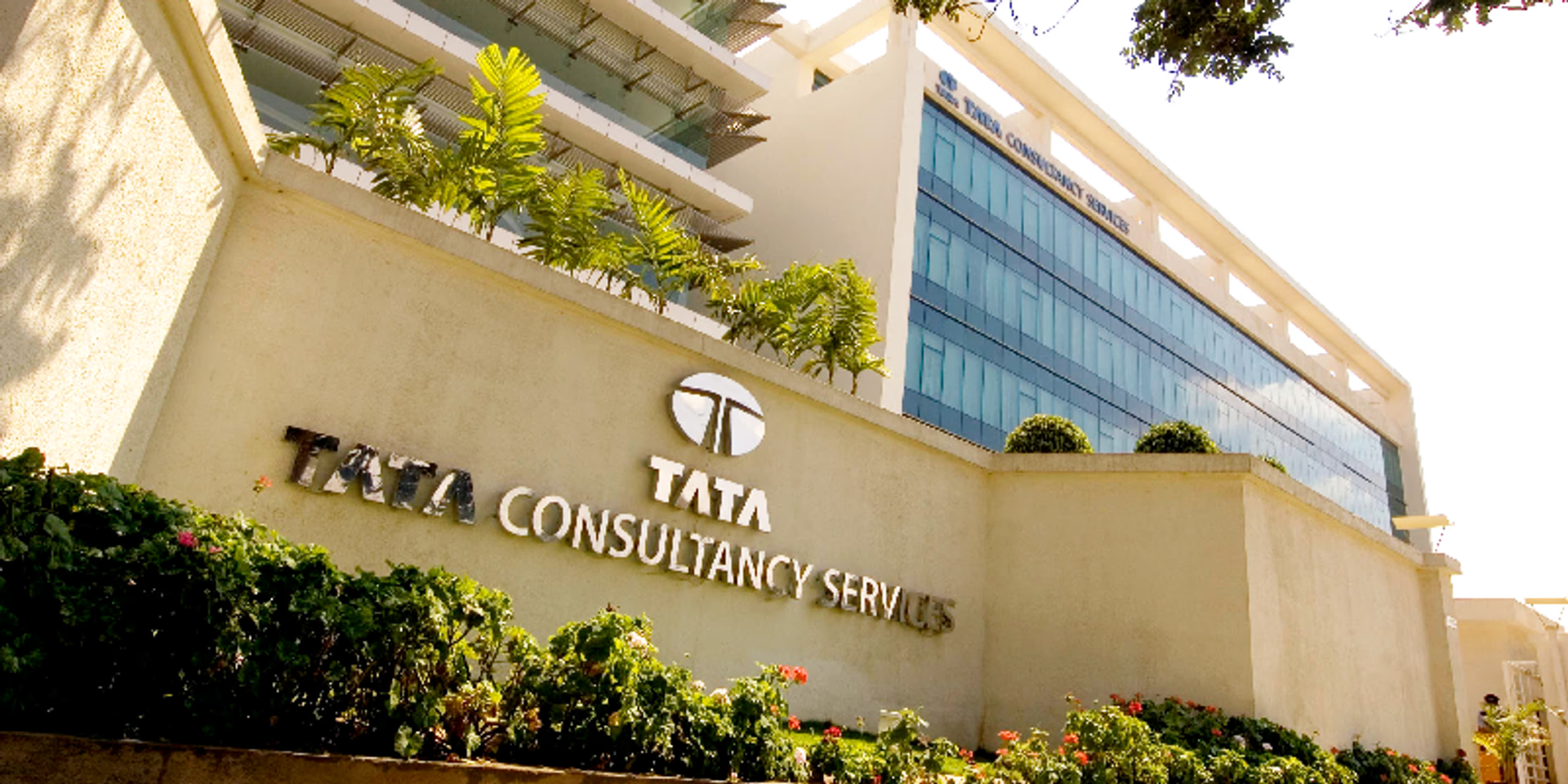
Tata Consultancy Services (TCS), India’s largest IT services provider, has laid out its growth roadmap for FY26, signaling a pivot toward high-demand digital segments such as artificial intelligence and cybersecurity. The strategy comes as the company reported a softer-than-anticipated performance in the first quarter of the new financial year.
Despite the headwinds, TCS leadership remains optimistic. CEO and Managing Director K Krithivasan, along with Executive Director and COO Aarthi Subramanian, acknowledged client caution and delayed decision-making in recent months, but emphasized that the company’s medium- to long-term prospects remain solid.
A Quarter of Adjustment, Not Decline
The Q1 FY26 results highlighted a temporary setback. Constant currency revenue dipped by 3.3% quarter-on-quarter, while total revenue stood at ₹63,437 crore—a 1.6% decline. In US dollar terms, revenue declined 0.6% from the previous quarter. A significant portion of this contraction—2.8%—was attributed to the gradual completion of the large-scale BSNL engagement.
Krithivasan urged investors and analysts to contextualize these numbers, pointing to healthy fundamentals. “We expected a marginally stronger finish to the quarter,” he said, “but the volatility in the macro landscape, particularly from March onward, led to hesitancy among clients and postponements of active initiatives.”
Building for the Future: AI, Cybersecurity, and Resilience
TCS leadership was quick to steer the narrative toward opportunity. The company continues to lean heavily on next-gen digital services to offset softness in legacy IT and infrastructure contracts. Artificial intelligence, machine learning, enterprise automation, and zero-trust cybersecurity have emerged as focal points in client conversations.
Importantly, TCS’ order pipeline remains strong, with a total contract value (TCV) in the $7–9 billion range, signaling robust client intent even amidst broader caution. The company is optimistic that international markets will outperform FY25 levels over the course of FY26, driven by recovery cycles and pent-up digital transformation needs.
What This Means for the Industry
At 365247, we see TCS’ Q1 FY26 results not as a sign of structural weakness, but as an indicator of a wider digital recalibration trend. Global enterprises are reevaluating their IT spend through a value-over-volume lens—focusing budgets on AI use cases, digital risk protection, and modular transformation.
TCS’ renewed emphasis on AI and cybersecurity isn’t just timely—it’s essential. As deal-making slows in traditional verticals, expect more vendors to shift focus toward solutions with shorter ROI cycles and higher impact-to-cost ratios.
This environment favors players with strong service delivery maturity and consultative depth, traits TCS continues to demonstrate.