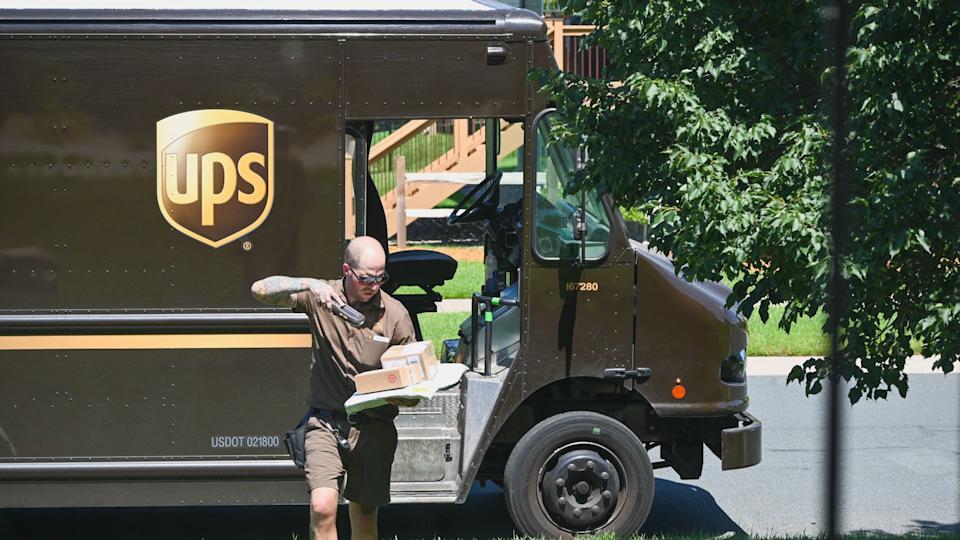
Global logistics giant UPS has announced a voluntary buyout program for unionized delivery drivers—marking a historic first—as it accelerates efforts to streamline its U.S. domestic ground network. The move comes amidst operational realignments driven by declining parcel volumes, margin compression, and a strategic retreat from unprofitable business tied to Amazon.
The buyout program is part of UPS’s broader “Network of the Future” initiative, a five-year restructuring plan aimed at consolidating 200 sortation centers, introducing advanced automation, and eliminating 20,000 front-line roles to reduce overcapacity and cut operational costs. In the past year alone, dozens of facilities have already been merged or shuttered.
UPS stated that eligible drivers will receive a “generous financial package” in addition to their existing retirement, pension, and healthcare benefits. However, the offer has triggered fierce resistance from the International Brotherhood of Teamsters, which represents approximately 340,000 UPS workers across the United States.
Union Dispute Over Contractual Obligations
The Teamsters argue the voluntary exit proposal violates the five-year labor contract ratified in 2023, which requires UPS to create 30,000 new full-time union jobs. Teamsters General President Sean O’Brien called the program a “backdoor maneuver” to avoid creating promised positions and accused UPS of attempting to erode long-standing worker protections through financial incentives.
“This is not just a labor issue—it’s a contractual breach,” said O’Brien. “UPS must be held accountable for its obligations, not attempt to sidestep them through weak severance offerings.”
The union further claims that under the severance plan, key benefits such as employer-funded retiree healthcare—available to long-serving drivers—may not be protected for those who accept buyouts. The current collective bargaining agreement mandates the promotion of 22,500 part-time workers to full-time roles and the addition of 7,500 new full-time jobs.
Broader Pressures on the UPS Business Model
Behind this labor clash lies a deeper story of shifting market dynamics. UPS has seen pressure on its parcel volumes from multiple directions: a recalibration of its relationship with Amazon (which UPS announced it would cut by 50% over 18 months), global trade volatility due to tariffs, and declining consumer e-commerce growth compared to pandemic peaks.
During its April earnings call, UPS executives said they plan to cut 25 million operating hours this year, expecting over $1.2 billion in labor-related savings. The company projects additional semi-variable cost reductions from the elimination of 20,000 positions.
UPS maintains it has engaged the Teamsters in dialogue and remains “committed to the agreements reached in 2023.” However, the union has accused the company of not fulfilling other elements of the agreement—such as failing to deliver on its promise to deploy 28,000 air-conditioned vehicles to improve working conditions in extreme heat.
What This Means Strategically
UPS’s buyout strategy represents a notable tension point between labor commitments and the company’s need to optimize for a changing logistics environment. As automation, AI-driven routing, and robotics continue to reshape last-mile delivery, traditional driver roles are under pressure.
Yet the backlash from organized labor signals the increasing difficulty of enacting rapid change in a unionized workforce, especially in a climate where unions are gaining renewed strength across multiple industries.
The unfolding UPS-Teamsters confrontation may shape how logistics firms navigate the fine line between efficiency and employee obligations. It also underscores the complexities companies face when long-term transformation efforts collide with near-term labor agreements. For UPS, the stakes are high—not just financially, but reputationally.
Join the 365247 Community here
IMAGE: Shutterstock