Source: ET BrandEquity
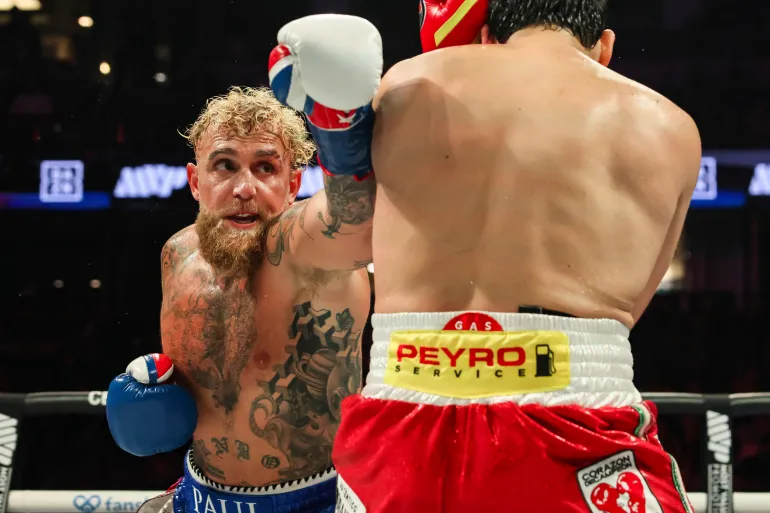
Jake Paul may have started out as a prankster on Vine, but in 2025, he is undeniably one of the most bankable names in American boxing. His recent win over Julio César Chávez Jr. — another in a long line of faded legends — marked his eighth headlining bout since 2021, and he has reportedly earned over $60 million in the ring. Yet for all the fanfare, the bigger question looms: Is this boxing’s evolution or erosion?
The Jake Paul Phenomenon
His critics — and they are many — argue that Paul’s rise has nothing to do with boxing. Even respected voices like Todd duBoef, president of Top Rank Boxing, admit: “He’s brilliant as a marketer and influencer… but I don’t really believe it has anything to do with boxing.”
Still, the numbers are hard to ignore:
- 108 million viewers tuned into Paul’s Netflix-fueled circus match with Mike Tyson.
- He has headlined on DAZN, ESPN+, and Netflix, blending social media virality with legacy broadcast exposure.
- He’s created a massive PPV business model around being the villain people love to hate.
Paul understands the psychology of modern sports consumers. His formula is simple: Provoke emotion, sustain attention, monetize outrage. Whether fans want to see him win or be knocked out, they tune in. And that, in today’s fragmented attention economy, is half the battle won.
Hate as a Revenue Stream
Paul has openly acknowledged that he weaponizes hate. “You look at all the big people — they were all villains,” he says, mentioning Floyd Mayweather, Mike Tyson, and even Muhammad Ali. The comparison drew heavy criticism — and that’s the point. Controversy sells.
But the comparison isn’t just flawed — it’s fundamentally ahistorical. Ali’s persona was forged in the crucible of civil rights and anti-war activism, not Instagram likes. The hate he received was institutional. Paul’s is algorithmic.
From Vine to the Ring: A New Breed of Fighter?
What makes Paul fascinating is that he didn’t come from boxing. He hacked his way into it through the digital backdoor. His past includes:
- Viral prank videos
- COVID-era party controversies
- Lawsuits from neighbors
- Victories over retired NBA and MMA fighters
And yet, he’s commanding audiences and rewriting the rulebook on what it means to be a draw in combat sports.
What This Means for Combat Sports Strategy
Jake Paul’s rise is not just an internet story — it’s a paradigm shift. Here’s what boxing promoters, streaming platforms, and rights holders must consider:
1. Fighter as a Brand First
Jake Paul shows that storytelling, not skill, often drives revenue. Combat sports must develop talent with narrative arcs, not just athletic resumes.
2. Entertainment-Led Matchmaking
While purists scoff, entertainment-first cards are unlocking new fanbases. Brands must rethink matchmaking as entertainment IP, not just sport.
3. Multi-Platform Strategy
From YouTube to DAZN to Netflix, Jake Paul thrives in multi-channel content ecosystems. Rights owners must prioritize omnichannel distribution, not just paywalls.
4. The Rise of Villain Economics
Paul has cracked the villain economy. Hate-watching is a business model. Marketers and sponsors must recognize that outrage can outperform admiration when managed correctly.
Join the 365247 Community here.
IMAGE: AP