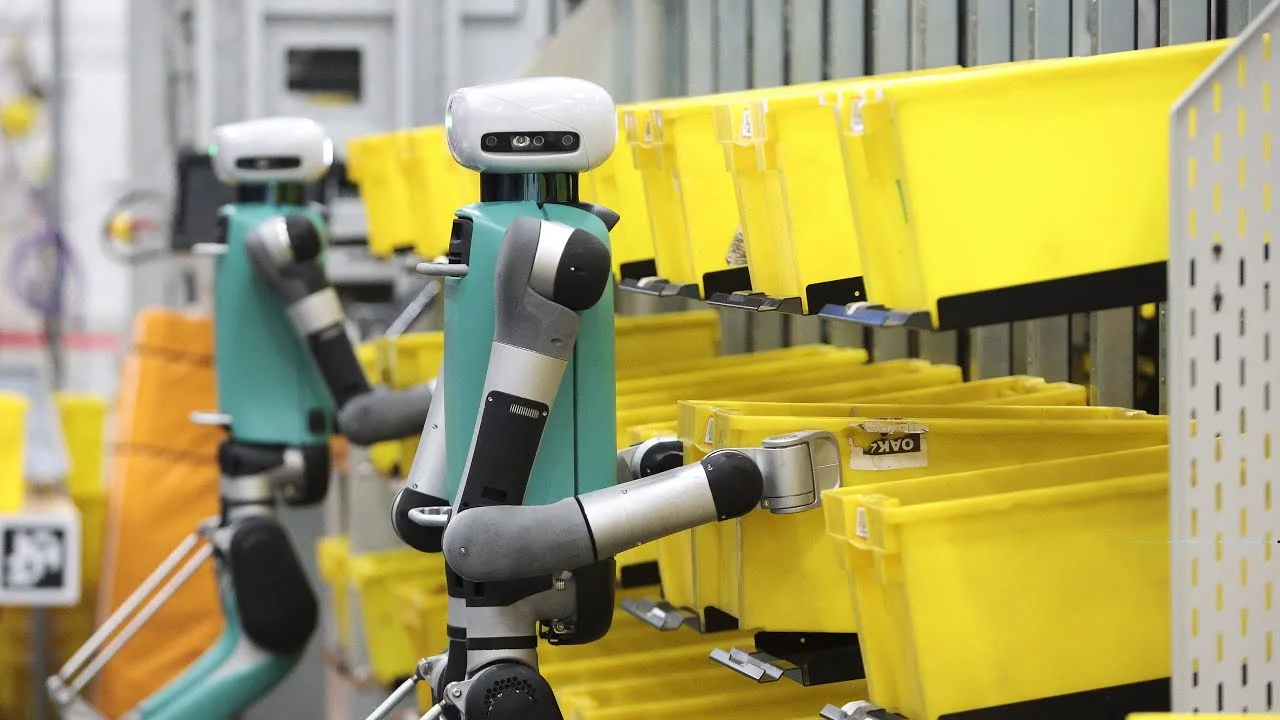
Amazon is approaching a historic milestone in automation: a robot workforce nearly equal in number to its human employees. As the company leans heavily into warehouse robotics, the divide between machine and manual labor in logistics continues to shrink — with global implications.
According to recent insights from industry sources, Amazon has now deployed over 1 million robots across its warehouse and fulfillment infrastructure. By comparison, the company employs approximately 1.56 million people, a significant proportion of whom work in warehouse operations.
This scale of automation is more than just a headline figure. An estimated 75% of Amazon’s global deliveries now involve some form of robotic assistance. From conveyor-based systems to advanced robotic arms and autonomous vehicles, automation is deeply embedded in Amazon’s logistics DNA.
Another revealing trend: the average number of human workers per Amazon facility reportedly dropped to around 670 in 2023 — the lowest in over a decade and a half. This reflects a strategic push to rebalance labor efficiency with technological capability.
What This Means for the Industry
The implications stretch far beyond Amazon:
- Redefined Labor Economics: As robotic integration becomes more cost-effective, traditional labor models in supply chain and warehousing may face fundamental restructuring.
- AI-Driven Efficiency: With increased use of AI and machine learning in task optimization, companies can reimagine not just logistics — but operations, customer fulfillment, and even returns processing.
- A New Standard: Amazon’s robotic scale sets a new benchmark for competitors, pressuring peers to modernize or risk falling behind.