Credit: Reporting and interview insights adapted from The Athletic
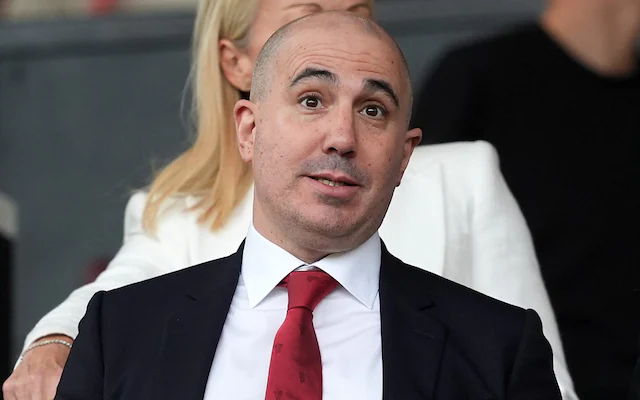
When Manchester United appointed Omar Berrada as CEO in 2024, it wasn’t just another leadership change—it was a strategic pivot. A Barcelona-bred, Manchester City-hardened executive stepping into the chaos of Old Trafford, Berrada’s appointment marked a fundamental shift in how United want to operate: modern, data-driven, global—but still grounded in football.
After sitting down for his first in-depth interview since taking the job (with United We Stand, as reported by The Athletic), Berrada made it clear: this rebuild is deliberate, long-term, and methodical.
And that gives clubs, leagues, and sports business stakeholders a rare peek into how a top European football institution is trying to reverse a decade of decline.
The Guardiola Blueprint — Applied at United
One of Berrada’s earliest decisions was backing Ruben Amorim, even if the timing (a mid-season appointment) raised eyebrows.
“We saw it as an investment,” said Berrada. Giving Amorim eight months to struggle, learn, and assess means United enter the summer of 2025 with clarity, not confusion.
It’s reminiscent of Guardiola’s first season at City—tough, transitional, but crucial for future success.
A Brutal Season, a Brutal Reset
United finished 15th. It was their worst campaign in 50 years. Fans were furious, morale nosedived, and even internally, staff faced mass layoffs and unpopular commercial decisions (like removing concession prices mid-season and moving loyal season-ticket holders).
But for Berrada, 2024-25 was the pain before the plan.
“We’ve taken all the short-term pain in this season… the worst is behind us,” he says.
What’s next? Stabilisation. Clear management structure. Defined football identity. Smarter recruitment. Better integration of academy talent. Financial discipline.
‘Project 150’: The Title Ambition
Berrada’s horizon is 2028, when United turns 150 years old. The goals?
- Be cash positive
- Win the Premier League (men’s team)
- Win the Women’s Super League (women’s team)
Unrealistic after finishing 15th? Possibly. But Berrada has seen worse—he joined Barcelona in 2004 when they were in turmoil, only to see them become European champions by 2006.
“We have two or three windows to build a team to start competing to win the Premier League.”
Transfer Strategy: Controlled Aggression
United’s summer signing Matheus Cunha has already arrived for £62.5M—a player Berrada calls “Cantona-esque”. More transfers will follow, but not without exits.
“We’ll make mistakes,” Berrada admits, “but we want to build something sustainable.”
There’s a focus on smart spending, aligned vision with Director of Football Jason Wilcox and manager Amorim, and patience in the market.
COMMERCIAL FRICTION: Lessons from Ticket Controversies
Internally, Berrada acknowledges the missteps. Last season’s £66 matchday ticket policy? He owns it.
“We didn’t communicate it well… we did it too quickly. That was a lesson.”
Now, there’s greater engagement with the fan advisory board and a commitment to improving rollout and transparency—although some critics argue it’s still reactive, not proactive.
The Man Behind the Rebuild
Born in Paris, raised in Morocco and the US, fluent in five languages, Berrada isn’t your typical football executive. With parents in academia and global development, and experience at both Barcelona and City, he bridges elite football, business intelligence, and cultural sensitivity.
From referencing Morocco’s historic 1986 World Cup run to invoking Johan Cruyff’s 3-4-3 system, Berrada sees football both tactically and structurally. He’s not just speaking to shareholders—he’s speaking football.
Why Omar Berrada’s Approach Matters?
Manchester United is more than a case study—it’s a live experiment in modern football operations. And there are actionable lessons here for every club, league, and rights-holder:
1. Turn Pain into Process
Most clubs panic after a bad season. Berrada used it to fast-track learning, talent mapping, and future-proofing. Pain is inevitable—how you use it defines your trajectory.
2. Recruitment is a 3-Window Plan
Short-term glory fades. A structured, 3-window roster strategy gives clarity to scouts, coaches, agents, and the fanbase.
3. Engagement Requires Humility
He admitted mistakes publicly. He apologised to staff. That humanisation matters in the modern football landscape, where fans expect transparency—not just trophies.
4. Long-Term Projects Need Milestones, Not Just Promises
Project 150 works because it has timelines and clear outcomes. This is how you sell a vision internally and externally.
Join the 365247 Community here.
IMAGE: PA