Credit: Reporting originally by The Athletic
FIFA has spent over $50 million to market its revamped 32-team Club World Cup in the United States — a figure that reflects the high stakes and even higher ambitions of football’s global governing body.
What’s become clear is this: the Club World Cup is more than a tournament. It’s a brand positioning experiment. A market-making exercise. And possibly, the future of global football’s commercial structure.
But with empty seats, inconsistent attendance, and fragmented buzz, the question isn’t just whether FIFA can fill stadiums — it’s whether it can sell an entirely new cultural product to a U.S. audience already saturated with domestic sports.
The Big Play: Turning the U.S. Into a Club Football Market
FIFA President Gianni Infantino has made this tournament a personal crusade, pushing for massive venues (many NFL-sized), influencer-heavy marketing campaigns, and a pricing model initially designed for a premium consumer base.
Key promotional moves include:
- Partnering with Instagram influencers — from baseball reporters to invention YouTubers — to ‘explain’ football to casual American fans.
- Heavily discounted last-minute ticketing strategies, including 80% price drops and bulk student offers.
- Leveraging diaspora fan bases (Brazilian, Argentine, Egyptian, Tunisian) to inject atmosphere into matches.
Despite these efforts, some matches have underperformed:
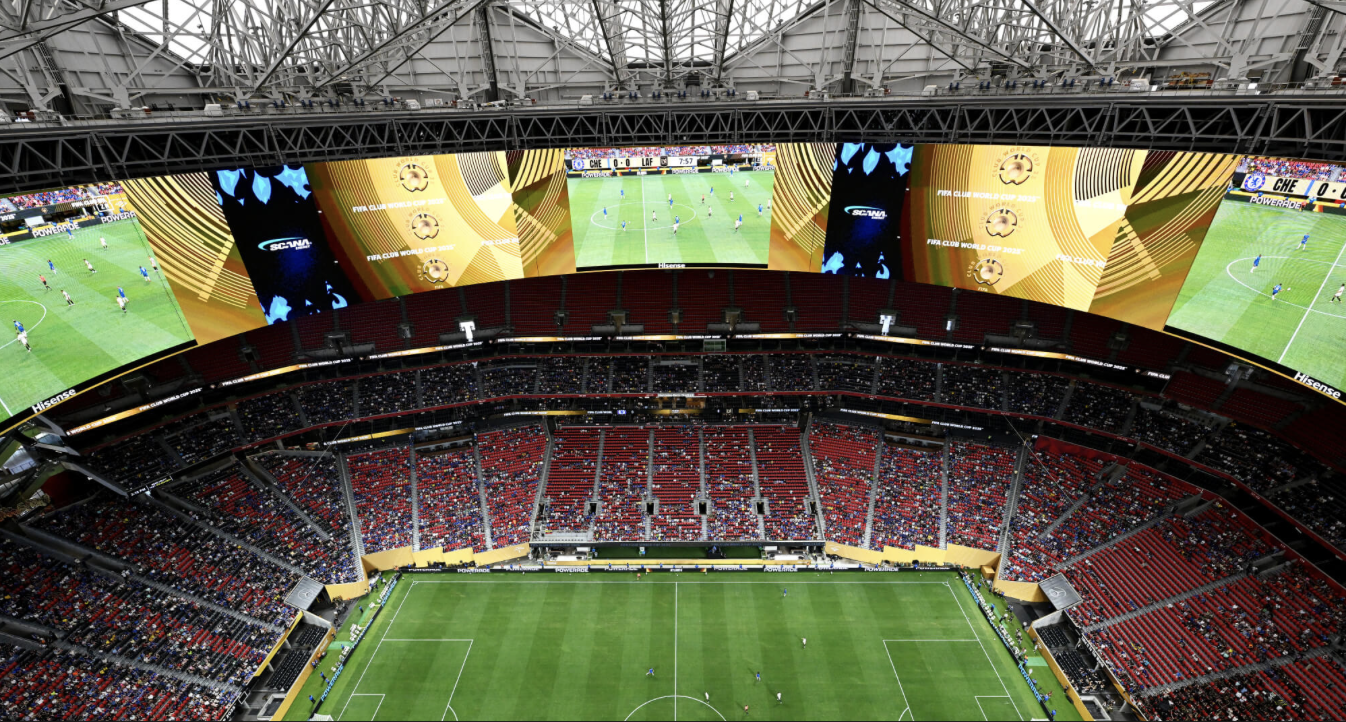
- Chelsea vs LAFC in Atlanta: Attendance of just 22,137 in a stadium that seats 71,000.
- Seattle vs Botafogo drew 30,151 fans in a 68,740-capacity stadium.
- Meanwhile, PSG vs Atletico Madrid hit 80,619 at the Rose Bowl, showing the power of marquee matchups.
The Disconnect: Product, Price, and Perception
The struggle isn’t about fan interest in football — it’s about how the product is being positioned.
Dynamic pricing confusion: Early prices above $300 were slashed to $55 or lower. This alienated early buyers and confused late adopters.
Mixed messaging: FIFA’s use of influencers instead of traditional sports media has failed to generate authentic credibility, especially in Europe.
Venue-size mismatch: Instead of prioritizing atmosphere, FIFA prioritized optics — large stadiums over sold-out visuals, leading to a disjointed fan experience.
There’s also the geopolitical friction. Some fans expressed unease at reports of U.S. immigration authorities’ presence at matches, especially in diverse cities. FIFA later asked officials to delete promotional posts that referenced this.
Strategic Anchors: Where FIFA Got It Right
While criticisms are valid, FIFA’s moves also highlight savvy long-term bets:
- The $1 billion global broadcast deal with Saudi-backed DAZN ensures long-term reach.
- A record $125 million prize fund helped placate European clubs — previously vocal opponents of the tournament.
- The inclusion of diaspora-fueled fanbases (e.g. Boca Juniors games in Miami) is paying off in atmospherics and ticket sales.
This approach — pairing mass distribution with global club icons — mirrors strategies in other sports like the NBA’s China playbook or the NFL’s expansion into Europe.
What Sports Rights Holders Can Learn:
- Global doesn’t mean universal – Just because football is popular globally doesn’t mean it’s plug-and-play in new markets. Cultural adaptation > brand assumption.
- Create new rituals, don’t rely on existing ones – In the U.S., football doesn’t have the matchday culture clubs rely on in Europe. FIFA needs to build local relevance — not just global prestige.
- The influencer economy is a layer, not a foundation – FIFA’s reliance on social-first promotion failed to deliver core sports credibility. In mature sports markets, you need both.
Key Recommendations:
- Geo-targeted storytelling: Tailor narratives around clubs’ heritage, players’ personalities, and rivalries. Don’t just ‘announce’ matches — build stories.
- Fan acquisition tiers: Introduce pricing strategies that reward early purchase and create urgency for latecomers — not the reverse.
- Venue-rights hybrid strategy: Mix premium-capacity stadiums with mid-sized arenas to ensure full houses and visual consistency.
At 365247 Consultancy, we help federations, leagues, and brands enter new markets with precision, strategy, and cultural fluency — from pricing psychology to promotional architecture and fan experience design.
If you’re planning a tournament, revamping a league structure, or expanding to new geographies — let’s talk.
Schedule your introductory call here.
Join the 365247 Community here.
IMAGE: Getty Images