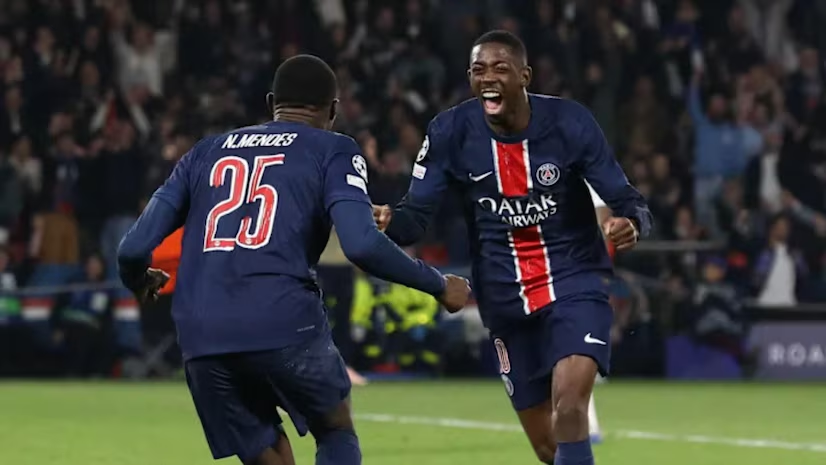
When Qatar Sports Investments (QSI) bought a struggling Paris Saint-Germain in 2011, few could have predicted what the club would become — not just in footballing terms, but as a global brand. What followed was one of the most intentional and innovative commercial transformations in modern sports — one that turned PSG into a billion-dollar merchandise machine, fashion icon, and cultural juggernaut.
As originally highlighted by The Joe Pomp Show, this transformation wasn’t driven by trophies — it was driven by brand engineering, bold investments, and a clear understanding: the future of sports isn’t just about football fans. It’s about culture.
From Mid-Table Club to Global Icon
In 2011, PSG was valued at just $75 million and losing $30 million a year. Fast forward to today:
- Valuation: $4.5 billion+
- Jersey Sales: Over 1M annually
- Annual Revenue: $900 million
- Social Media Followers: 200 million+
PSG’s vision was simple, yet radical: don’t just act like a club, act like a luxury brand but we keep our roots in mind.
Key Pillars Behind PSG’s Brand Expansion
Paris Saint-Germain’s rise from a mid-table Ligue 1 side to a global luxury brand is not just a case study in football marketing—it’s a blueprint for how sports organizations can evolve into culture-defining institutions. Below, we break down the strategic pillars that powered PSG’s transformation:
1. Cultural Integration > Traditional Football Marketing
Rather than relying solely on footballing success or legacy fanbases, PSG embedded itself into cultural zeitgeists—fashion, music, celebrity, and streetwear. This approach allowed them to transcend the boundaries of sport.
- Example: The Jordan Brand x PSG collaboration wasn’t just a kit drop. It positioned PSG within the global sneakerhead and streetwear community. Suddenly, wearing a PSG kit was as culturally resonant as wearing Supreme or Off-White.
- Consulting Insight: Clubs should stop thinking like football institutions and start thinking like lifestyle curators. Youth today connect with identity over geography, and PSG capitalized on this shift.
2. Global Flagship Stores as Cultural Landmarks
PSG didn’t just open merchandise stores; they curated branded environments—experiential retail destinations fusing architecture, hospitality, and fandom.
- Strategic Move: Their NYC Fifth Avenue boutique was a first for any non-American sports team and is designed not just to sell, but to impress, inspire, and Instagram.
- Consulting Insight: Modern fans want to “experience” a brand. Clubs entering new markets should blend retail with sensory engagement—custom zones, themed cafés, art spaces, and limited local collabs.
3. Celebrity Influence as Brand Distribution
From LeBron and Beyoncé to Giannis and Justin Timberlake, PSG became the football brand of the stars. These weren’t paid endorsements—they were aspirational associations.
- Why It Worked: Celebrities chose PSG organically because the brand aligned with their own—cool, urban, global, and disruptive.
- Clubs should shift from “ambassadors” to “believers.” Focus on building a brand so attractive that tastemakers want to be seen with it, with or without a contract.
4. Collaboration with Luxury, Streetwear, and Contemporary Art
Rather than licensing merchandise to sportswear conglomerates, PSG curated fashion-forward releases with global cultural tastemakers.
- Key Collaborations: Off-White, Jordan, Bape, and Supreme helped PSG become a top-selling jersey brand globally.
- Consulting Insight: Co-creation is more potent than sponsorship. Invite designers, artists, and cultural icons to reinterpret the club’s identity—creating scarcity, buzz, and value.
5. Digital Dominance & Localisation at Scale
With over 200M+ followers, PSG isn’t just a football brand—it’s a global digital content machine. They’ve mastered the art of multilingual, multi-platform storytelling.
- PSG players wishing fans Happy Chinese New Year in Mandarin on Weibo is more than goodwill—it’s precision localisation for fan acquisition.
- Global expansion means hyper-local execution. Build micro-content teams around the world who can tell stories in culturally authentic ways.
6. Player-as-Platform Philosophy
The club didn’t just recruit stars like Neymar, Messi, and Mbappé for their on-field talent—they saw them as brand accelerators.
- Impact: PSG’s social media and merchandise exploded with each new superstar. But the club wisely didn’t make its identity player-dependent—every departure saw no major revenue dip.
- Build a club identity stronger than any single player. Use stars as distribution channels, but ensure the club’s core aesthetic, voice, and vision stay consistent.
7. Institutional Thinking: Football Club as Global Brand
PSG never aimed to be just a football club—they aimed to become the Louis Vuitton of sport. They don’t sell matches. They sell lifestyle, aspiration, and belonging.
- Strategic Positioning: This mindset helped PSG attract investors like Arctos and celebrities like Kevin Durant—not just fans, but stakeholders.
- Consulting Insight: Your club’s brand should be expansive enough to attract capital, culture, and consumers. Think bigger than the sport you play.
What Clubs Can Learn From PSG’s Playbook
As a football business consultancy, we believe PSG’s story isn’t just remarkable — it’s replicable in customised formats. Here’s how:
1. Rethink Your Identity
PSG never set out to be the next Real Madrid. They aimed to become the Louis Vuitton of football. Clubs must define their brand archetype first — are you heritage, rebel, or modern luxury?
2. Use Football as a Bridge to Culture
Your players are more than athletes — they are media assets. Amplify them beyond the pitch: art, fashion, language, local holidays, and music.
3. Merchandise Is Not Just Revenue — It’s Marketing
Think of merchandise not just as gear, but as wearable brand extensions. Partner with designers, drop capsule collections, and use scarcity to generate buzz.
4. Global Storefronts Must Feel Local
PSG’s decision to use local architects per location created bespoke cultural experiences. Clubs entering global markets should avoid copy-paste rollouts.
5. Build a marketable brand, Not Just Teams
Star players help — but PSG showed that brand hype can outlast talent turnover. Focus on building cultural consistency, not just on-pitch star power.
If you’re a club outside the top five leagues — or even an ambitious second-tier side — here’s our tailored strategy to replicate PSG’s playbook without their budget:
The “Culture-First Expansion Framework”
Step 1: Conduct a Brand Audit to define your cultural identity
Step 2: Identify crossover industries (fashion, gaming, music, etc.) relevant to your local or diaspora audience
Step 3: Develop one high-impact creative collaboration — not with a football sponsor, but with a culture-maker
Step 4: Launch a story-driven jersey or merchandise drop supported by influencer amplification
Step 5: Integrate lifestyle elements into stadiums and retail footprints (cafés, artist-designed interiors, localised store content)
Step 6: Train digital teams to create shareable moments, not just scorelines — elevate everything from posters to TikToks
We’re currently implementing versions of this strategy across clubs in Europe, Asia, and the Middle East.
Whether you’re looking to elevate your brand, increase global visibility, or monetise beyond matchday, we can help.
Source: The Joe Pomp Show
Original insights adapted, restructured, and expanded for consultancy purposes.
IMAGE: Reuters