Sourced via The Athletic
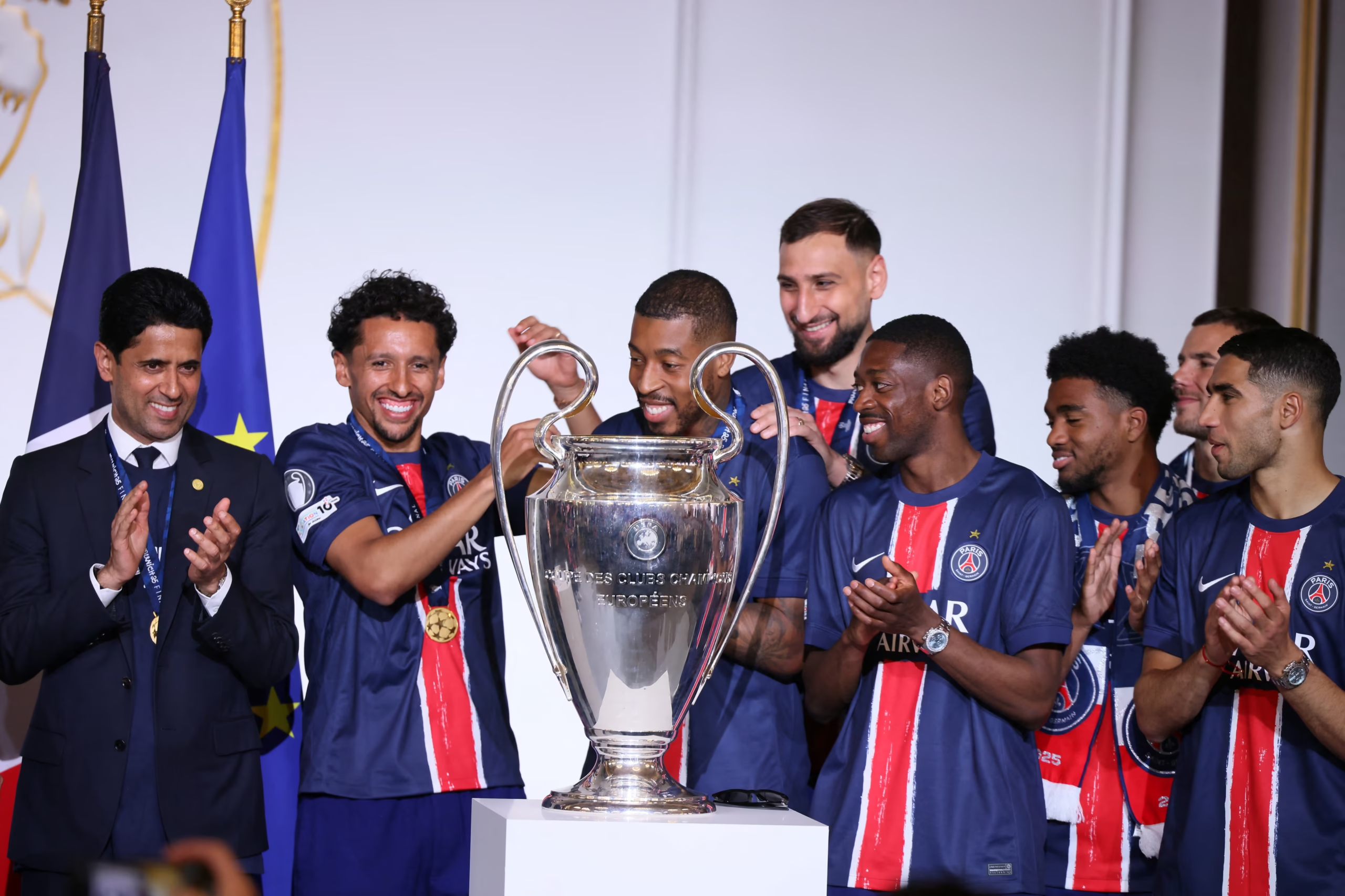
On a historic Saturday night in Munich, Paris Saint-Germain delivered a 5-0 thrashing of Inter Milan that will be remembered as one of the most one-sided Champions League finals ever. It wasn’t just a win—it was a statement. A record-breaking margin of victory and a performance that showcased the depth, energy, and tactical maturity of a team finally fulfilling its immense potential.
For years, PSG have been the poster club of unfulfilled promise, a squad shaped by petrodollars but undermined by superstar imbalance. But this season marked a clear pivot—one that could redefine their legacy and send shockwaves across European football.
A Tactical and Cultural Shift
Gone are the days when PSG depended solely on marquee names like Messi, Ibrahimovic and Neymar. Instead, manager Luis Enrique has built a system that thrives on dynamism, youth, and cohesion. The relentless pressing, the aggression, and the fearless flair seen in players like Vitinha, Desire Doue, and Senny Mayulu demonstrated not only tactical excellence but also a new team spirit that’s infectious.
What stood out wasn’t just the goals or the technical brilliance—it was the sense of joy and freedom. From Hakimi’s high attacking line to the cheeky flicks of Dembele, this PSG side looked like a team enjoying the moment, guided by a coach who empowers risk and rewards instinct.
The Rise of Youth-First Ideology
This final wasn’t just a celebration of PSG’s power but of a broader footballing trend: the accelerated rise of young stars. Where once clubs hesitated to trust teenagers, now we see 18- and 19-year-olds defining tournaments. PSG’s success without Messi or Neymar underscores how talent development and bravery in selection can elevate clubs beyond the old guard.
Luis Enrique’s belief in youth echoes his philosophy from his Spain tenure: judge process over execution. A failed dribble is acceptable if the idea was right. This psychological safety net enables PSG’s young guns to play with confidence, unpredictability, and joy—a terrifying proposition for opponents.
The Business of Dominance
Beyond the aesthetics and tactics, PSG’s Champions League triumph is financially seismic. With UEFA prize money expected to surpass €140 million, their European success dwarfs anything available domestically. Ligue 1, already facing a crisis due to a collapsed TV deal with DAZN, cannot compete financially or competitively.
This disparity means that for clubs like PSG—and increasingly Lille, Monaco, and even debutants Brest—Europe isn’t just a stage, it’s the main source of growth. Brest, for instance, are expected to earn around €50 million from their European run, nearly matching their entire 2023-24 revenue of €64 million.
This economic imbalance will likely reshape the French football landscape. Domestic competition risks becoming irrelevant, while Champions League performance becomes the true metric of success and survival.
Inter, Serie A, and the Relative Gap
Inter Milan, for all their pedigree, were no match on the night. Though they too will earn more from UEFA than Serie A this season, the financial gap isn’t as stark as in France. Inter’s domestic rewards remain healthy—over €100 million for winning Serie A previously—so the balance between home and Europe still holds. That’s not the case for PSG, whose dominance may now extend uncontested across Ligue 1.
Strategic Recommendations for Clubs and Leagues
- Clubs like PSG should double down on youth development and data-driven scouting, expanding their pipeline across Africa, South America, and Asia. The new benchmark is not superstar acquisition, but internal innovation and tactical modernism.
- Mid-tier clubs in France must build strategic partnerships with European academies and co-invest in content, brand storytelling, and regional fanbases to remain relevant in the shadow of PSG’s growing dominance.
- Ligue 1’s leadership should pivot from broadcast dependency to a digital-first model, offering global OTT subscriptions, data-rich fantasy experiences, and immersive content to build a sustainable ecosystem.
- UEFA and governing bodies must address economic disparity by reconsidering revenue distribution, solidarity payments, and enforcing tighter financial governance across leagues to protect competitive integrity.
For clubs, investors, and stakeholders looking to navigate this new era of football—where youth, system coherence, and financial restructuring are at the forefront—our consultancy offers strategic guidance, market intelligence, and execution support. Reach out to explore how we can build a future-ready football strategy tailored to your ambitions.
IMAGE: Reuters