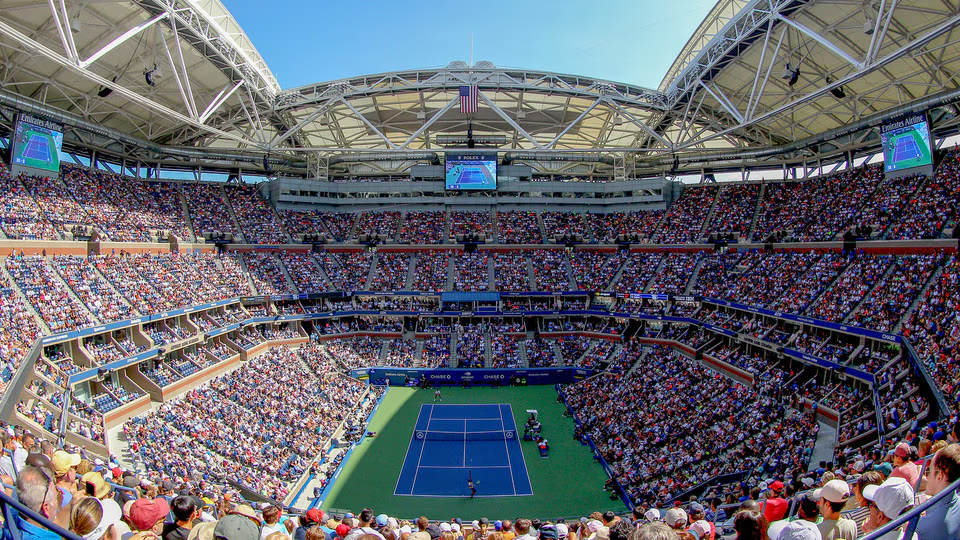
Arthur Ashe Stadium has long been a cathedral of tennis—a place where icons are made, rivalries etched into history, and New York’s energy spills onto the court. But tradition alone can’t future-proof a global sporting event. That’s why the United States Tennis Association (USTA) has just announced its boldest move yet: a transformative $800 million investment to reposition the US Open not just as a Grand Slam, but as the benchmark for modern tennis experiences.
This isn’t just a facelift. It’s a strategic reinvention of one of the sport’s most iconic venues, designed to ensure the US Open doesn’t just keep up with the likes of Wimbledon and the Australian Open—but sets the pace for a new generation of fans, athletes, and partners.
Why Now? The Venue Arms Race Is Real
In recent years, tennis has entered a new competitive arena—off the court. The race is no longer just about player prestige but about infrastructure, technology, sustainability, and experience. Major tournaments have made significant investments to future-proof their legacy: from Wimbledon’s retractable roofs to Melbourne Park’s smart venue upgrades.
The USTA’s response is decisive. This multi-year redevelopment—set to conclude in time for the 2027 US Open—is the largest in the tournament’s history. It modernizes the core stadium while building a brand-new, state-of-the-art Player Performance Center. And crucially, it’s being executed with minimal disruption to the tournament’s annual schedule—a logistical win for both fans and broadcasters.
Elevating the Fan Journey
For a tournament that draws over 700,000 attendees annually, the matchday experience is central to brand value. The redevelopment addresses this with:
- Expanded seating capacity, including 2,000 new courtside seats
- Wider, modernised concourses for better movement and upgraded amenities
- New entryway architecture, designed to deliver a more immersive arrival moment
In a media-rich age where every moment is shared, the fan experience is content—and the USTA is ensuring every angle is camera-ready.
The $250M Bet on Player Performance
Today’s top athletes demand more than tradition. They need recovery zones, smart tech integration, personalized nutrition, and wellness environments. That’s where the new Player Performance Center comes in—a $250 million complex that reflects the changing expectations of elite talent.
Features include:
- High-performance indoor and outdoor training spaces
- Cutting-edge locker rooms and sensory recovery rooms
- Exclusive athlete dining lounges and courtyard zones
This is not just about comfort—it’s a strategic talent play. Creating an elite ecosystem makes the US Open more attractive to top players, fostering loyalty, performance, and narrative-building.
Architectural Storytelling: Tradition Meets Innovation
The project reunites the USTA with architecture firm ROSSETTI, who originally designed the stadium in the 1990s. But this time, global design icon Daniel Libeskind joins the team to reimagine the stadium’s grand entrance—blending New York’s energy with a futuristic sports identity.
It’s a statement move: showing the world that heritage and modernity can co-exist, and that the US Open isn’t afraid to redesign its legacy.
The Bigger Picture: Strategic Implications for Global Tennis
With this overhaul, the US Open is doing more than updating its infrastructure—it’s shifting the paradigm for what a Grand Slam represents. It’s moving from event to ecosystem, from spectacle to experience. And it’s a signal to federations, broadcasters, and sponsors that the US Open is investing in its long-term cultural and commercial relevance.
A notable development: the 2025 tournament will be extended by an extra day, accommodating an additional 70,000 fans. It’s a strategic move that aligns with growing global interest, unlocking new inventory for ticketing, hospitality, and media rights without compromising the on-court product.
Final Take: A Blueprint for 21st Century Sports Venues
In the age of immersive fan journeys, athlete-first ecosystems, and hyper-connected broadcasting, sports venues are no longer static structures. They’re dynamic platforms for storytelling, performance, and brand growth.
The US Open’s $800 million transformation isn’t just about maintaining prestige—it’s about shaping the future of the sport. And for industry leaders watching closely, it offers a roadmap: build experiences, not just arenas.